Industry insights
DPDP Act 2023 for small business: what to do with customer data
The DPDP Act 2023 asks a small business to collect customer data with clear consent, use it for a stated purpose, keep it safe and delete it when done.
Written by The iCRM team
Published 8 min read
- 18 months To phase in most duties from Nov 2025
- 90 days To answer an access or erasure request
- ₹250 crore Top penalty for weak security
- 5 habits To keep a customer list lawful
On this page
- Key takeaways
- What the DPDP Act 2023 means for a small business
- Step 1: Ask for consent in plain words
- Step 2: Use data only for the purpose you gave
- Step 3: Let people see, correct and erase their data
- Step 4: Keep the data safe
- Step 5: Delete what you no longer need
- Doing it in iCRM
- A DPDP Act checklist
- Sources
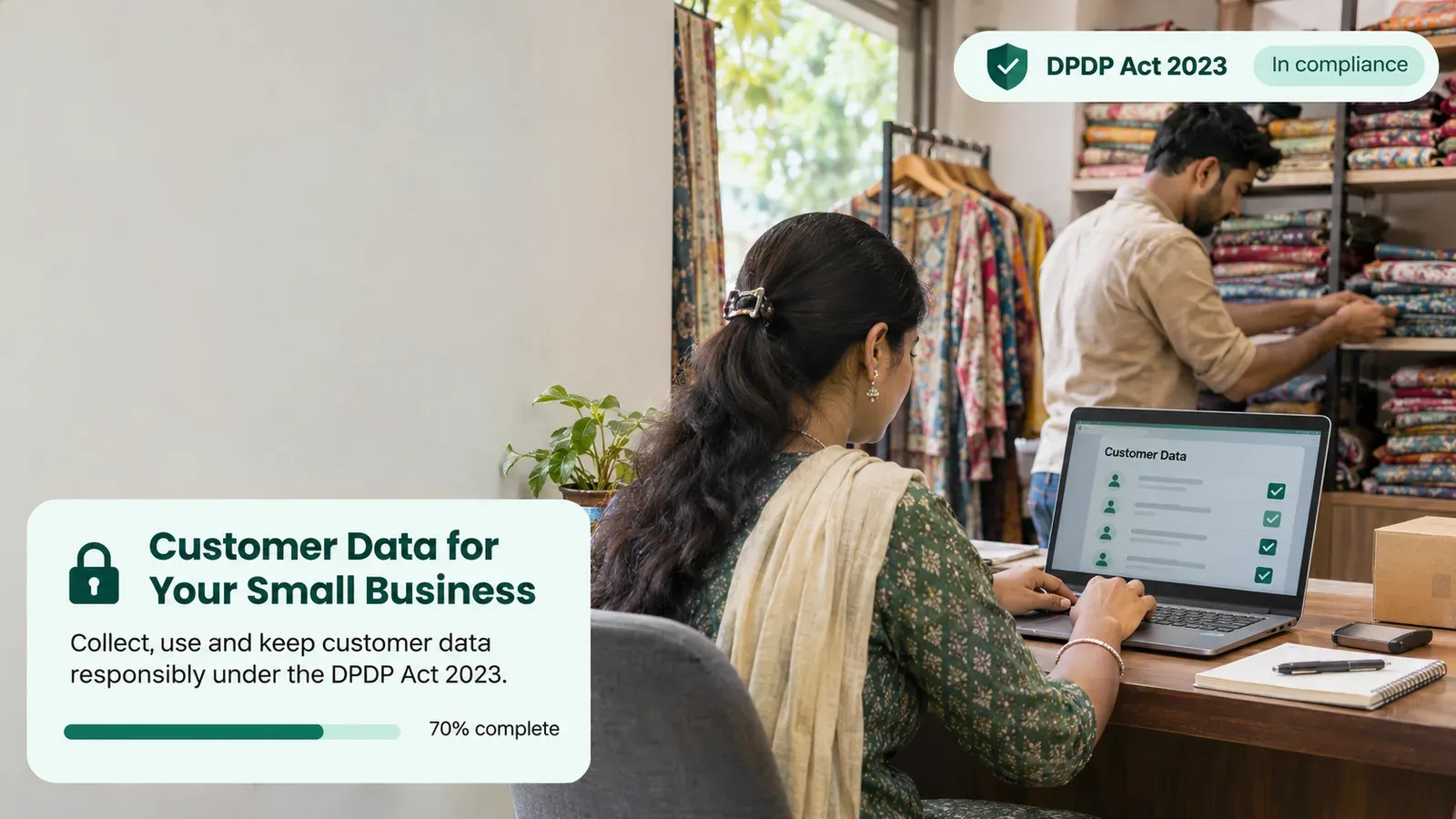
If you keep customer names, phone numbers or emails on a computer, a phone or in the cloud, the Digital Personal Data Protection Act 2023 applies to you. It asks five things in plain terms: get clear consent, use the data only for the purpose you gave, let people see and correct it, keep it safe, and delete it when you are done. This guide turns those duties into habits a small team can keep.
Key takeaways
- The DPDP Act 2023 covers digital personal data, so your lead list, WhatsApp contacts and billing records all count.
- Ask for consent in plain words, for a stated purpose, and make it as easy to withdraw as it was to give.
- Answer requests to see, correct or erase data within ninety days.
- Keep data safe, and tell the Data Protection Board and the affected people if it leaks.
- Most duties apply about eighteen months after the Rules were notified in November 2025, so around May 2027.
What the DPDP Act 2023 means for a small business
Parliament passed the Digital Personal Data Protection Act on 11 August 2023. The government notified the DPDP Rules on 14 November 2025, which give the Act its working detail. The Rules allow an eighteen-month period for businesses to get ready.
The Act uses a few terms worth knowing. The person whose data you hold is the data principal. Your business, which decides why and how the data is used, is the data fiduciary. Any outside firm that handles the data for you, such as a software provider or a call centre, is a data processor.
There is no general exemption for small firms. If a builder, a clinic or a shop keeps enquiries in digital form, the Act applies. The good news is that its core duties are simple habits, not paperwork for its own sake.
| Duty | What it means for you | A simple habit |
|---|---|---|
| Consent | Ask clearly before you use data for anything new | A plain consent line on every form |
| Purpose | Use data only for the reason you gave | Write the reason next to each list |
| Access and correction | Let people see, correct and update their data | One named person answers requests |
| Security | Protect data from leaks and misuse | Logins for each person, no shared sheets |
| Deletion | Erase data you no longer need | A review of old leads every quarter |
Step 1: Ask for consent in plain words
Under the Act, consent must be free, specific, informed and unambiguous, given by a clear action. A ticked box that the customer ticks themselves works. A box ticked for them does not.
Every request for consent needs a notice. The Rules say the notice must explain the specific purpose for which the data is collected and used, in plain language. Keep it short and separate from other terms.
A consent line that works
I agree that this business may use my name and phone number to reply to my enquiry and send me my quote. I can withdraw this at any time by messaging the number below.
People can withdraw consent at any time, and it must be as easy to withdraw as it was to give. If they agreed by ticking a box online, a single message or click should undo it.
The Act also allows some uses without a separate consent. One is when a person gives you their data for a stated purpose, such as asking for a quote, and you use it for that purpose only. Sending them unrelated offers later is a new purpose and needs consent.
Children need extra care. For anyone under 18, the Act requires verifiable consent from a parent or guardian.
Step 2: Use data only for the purpose you gave
Purpose is the heart of the law. If someone shared their number to book a site visit, use it for the visit and the work that follows. Do not pass it to a partner firm or add it to a sales list without asking.
Collect only what you need. A plumbing enquiry needs a name, a phone number and an address. It rarely needs a date of birth or an Aadhaar number.
Write the purpose down next to each list you keep. It makes the right answer obvious when someone asks, “Can we use these contacts for the Diwali offer?”
Step 3: Let people see, correct and erase their data
The Act gives people rights over their data. They can ask what you hold, ask you to correct or update it, and ask you to erase it in certain situations. The Rules require you to answer such requests within a maximum of ninety days.
You must also give people a clear contact for questions about their data. In a small business this can simply be the owner or a named manager, with a phone number and email on your website and invoices.
| Request | What to do | Time limit |
|---|---|---|
| See my data | Share what you hold and why | Within 90 days |
| Correct or update it | Change the details everywhere you keep them | Within 90 days |
| Erase it | Delete it, unless another law needs you to keep it | Within 90 days |
| Withdraw consent | Stop using it for that purpose | As soon as you can |
Remember that other laws may ask you to keep some records. GST invoices and accounts, for example, must be kept for a set period. Erasing a lead’s phone number does not mean deleting a tax invoice you are required to keep.
Step 4: Keep the data safe
The Act asks every data fiduciary to take reasonable security safeguards to prevent a personal data breach. This is where the largest penalty sits: up to ₹250 crore for failing to keep those safeguards.
For a small business, reasonable usually starts with the basics:
- Give each person their own login, and remove it the day they leave.
- Stop sharing customer spreadsheets on personal email and messaging groups.
- Keep data in one system rather than many copies on many phones.
- Let staff see only the customers they work with.
- Check that the software providers you use protect data and will help if there is a problem.
If a breach happens, such as a stolen phone or a hacked account, you must inform the Data Protection Board and each affected person. The Rules say the message must be in plain language and explain what happened, the possible impact, the steps taken and a contact for help.
Step 5: Delete what you no longer need
Data should be kept only as long as the purpose needs it. When a person withdraws consent, or when the purpose is clearly over, erase their data, and ask any processor who holds it for you to do the same.
A simple rhythm helps. Every quarter, look at leads that went cold long ago, customers who asked to be removed, and lists made for one-off campaigns. Delete what you no longer need, and keep what the law requires.
Doing it in iCRM
- One list for every enquiry. Lead management keeps who asked, what they need and what happens next in one place, so leads do not sit in many phones and spreadsheets.
- Customer details you can update. Customer management keeps each customer’s details, history and open work together, which makes it easier to find, correct or remove their data when they ask.
- A date for every request. Task management and the calendar give each data request an owner and a due date, well inside ninety days.
- Files shared with the right people. Document sharing lets you share files with the right people from one place, instead of forwarding customer documents on personal chats.
- Talk inside the team. Team messaging keeps discussion about a customer within your team, rather than in groups outside the business.
A DPDP Act checklist
- A plain consent line on every form, with the purpose stated.
- A clear way for people to withdraw consent.
- The purpose written down for each list you keep.
- Only the details you need, nothing extra.
- A named person and a contact for data questions.
- Requests answered within ninety days.
- Separate logins for each person, removed when they leave.
- A plan for telling the Board and customers if data leaks.
- A quarterly review to delete data you no longer need.
Sources
- The Digital Personal Data Protection Act, 2023 (Act No. 22 of 2023), India Code
- DPDP Rules, 2025 notified: a citizen-centric framework, Press Information Bureau, 17 November 2025
- Ministry of Electronics and Information Technology
This guide gives general information, not legal advice. For your own situation, speak to a lawyer or a qualified adviser.
Related articles
-

E-way bill rules for transporters: a quick checklist
An e-way bill is needed for most goods over ₹50,000. Validity runs one day per 200 km from Part B, and the driver carries the invoice and the bill.
- Checklist
- 2 tables
- 6 questions answered
-
FPO buyer order management: orders, deliveries and payments
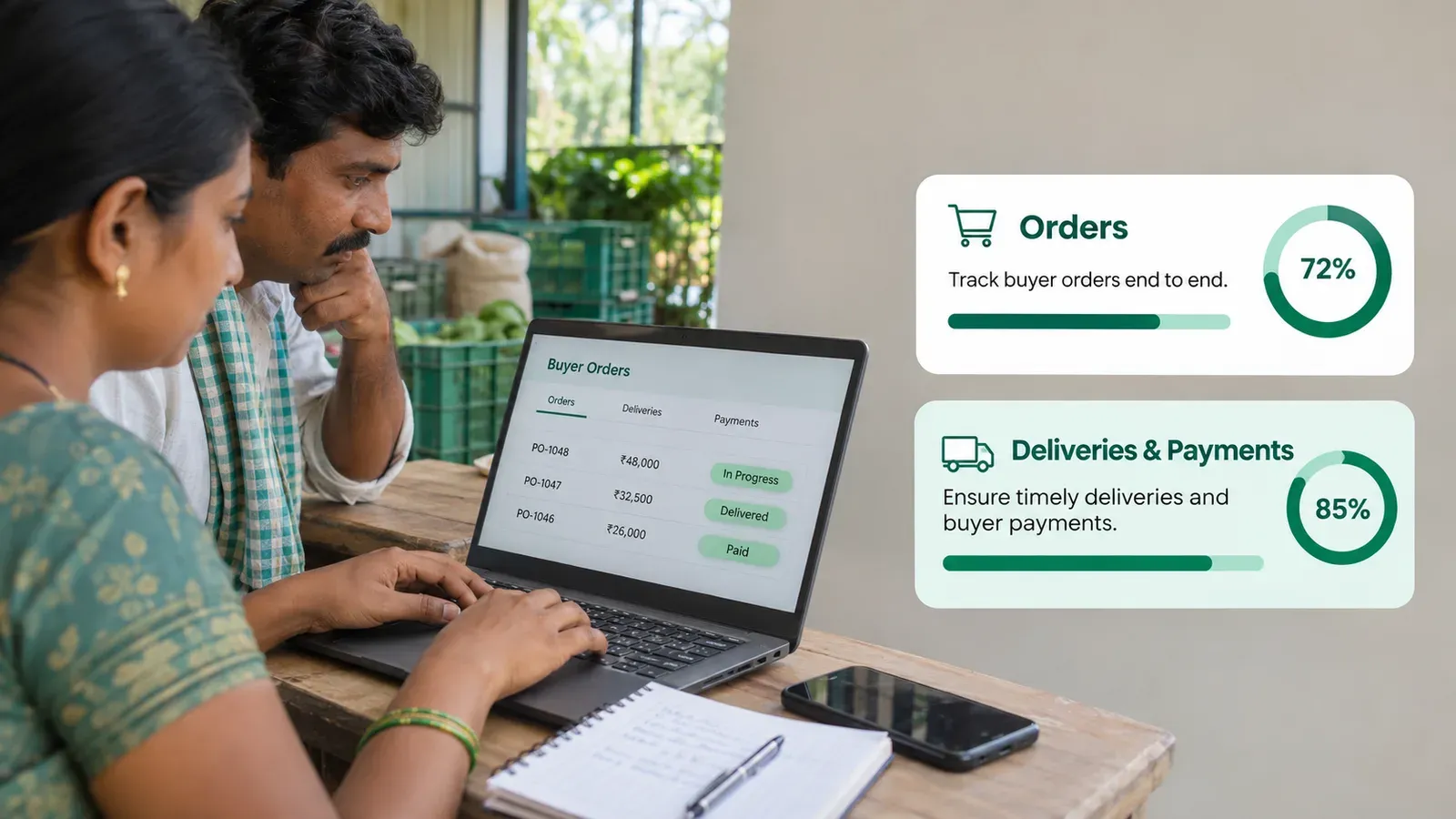
Keep each buyer's enquiry, order, delivery notes and payment due in one record, so your FPO knows what was promised, what was sent and what is still owed.
- Checklist
- 2 tables
- 6 questions answered
-

Part 2: GST credit note rules: when and how to issue one
Under Section 34 you issue a GST credit note when goods come back, a price is cut or a bill was too high, and declare it by 30 November after the year ends.
- Checklist
- 2 tables
- 5 questions answered
Recognized with numerous awards
Support, security, uptime and results, with the figures behind each badge.















FAQ
Frequently asked questions
Straight answers to what people ask most about iCRM.
Set up for your industry
Pick yours and its features come ready.
- Farm Businesses
- Automotive Dealers
- Consulting Firms
- Online Retail
- Education Institutes
- Energy Companies
- Financial Services
- Healthcare Clinics
- Hospitality Businesses
- Law Firms
- Logistics Companies
- Manufacturing Companies
- Media Agencies
- Nonprofit Organisations
- Real Estate
- Technology Companies
-
Does the DPDP Act 2023 apply to a small business?
Yes, if you keep personal data in digital form, such as names, phone numbers and emails in a phone, a spreadsheet or a CRM. The Act has no general exemption for small businesses, though the government can relax some duties for certain classes, such as startups.
-
When do the DPDP Rules come fully into force?
The Rules were notified on 14 November 2025 with an eighteen-month period for phased compliance. Most duties on businesses apply at the end of that period, so around May 2027. It is sensible to start now.
-
Do I need consent to call someone who sent me an enquiry?
The Act allows you to use data a person gave you voluntarily for the purpose they gave it, such as replying to their enquiry. For anything beyond that, such as adding them to offers or newsletters, ask for clear consent.
-
How long can I keep old leads and customer details?
Only as long as you need them for the purpose they were given, or as long as another law requires, such as tax and accounts records. When neither applies, or the person withdraws consent, delete the data.
-
What must I do if customer data is leaked?
Under the Act you must tell the Data Protection Board and each affected person. The Rules ask for a plain message saying what happened, the likely impact, the steps taken and a contact for help.
-
What is the biggest penalty under the DPDP Act?
Up to ₹250 crore for failing to keep reasonable security safeguards. Failing to report a breach can cost up to ₹200 crore, and other breaches of the Act or Rules up to ₹50 crore.
Get started with iCRM
Leads, quotes, work, invoices and payments in one app, set up for the way your industry works.
- 99% Uptime guarantee
- ISO ISO-aligned security
- 24/7 Response support
- GDPR GDPR compliant
- SSL SSL encrypted
-
16
Industries Each with its own features
-
47
Features Across those industries
-
11
Areas of work From leads to payments
-
3
Editions India, France and UAE