Industry insights
Choosing a CRM for small business in India: what matters
A CRM for small business in India should make GST-ready quotes and invoices, price in rupees, work on a phone and keep customer data safe under the DPDP Act.
Written by The iCRM team
Published 7 min read
- 45 days Longest written term to pay an MSE
- 50,000 rupees Usual e-way bill threshold
- 18 months Phased compliance under DPDP Rules
- 10 digits In every Indian mobile number
On this page
- Key takeaways
- Start with how your business works today
- Check that quotes and invoices are GST-ready
- Look at the price in rupees, and the real total
- Test it on a phone, on site
- Make sure it handles Indian phone numbers
- Ask how customer data is protected
- Doing it in iCRM
- A CRM for small business checklist
- Sources
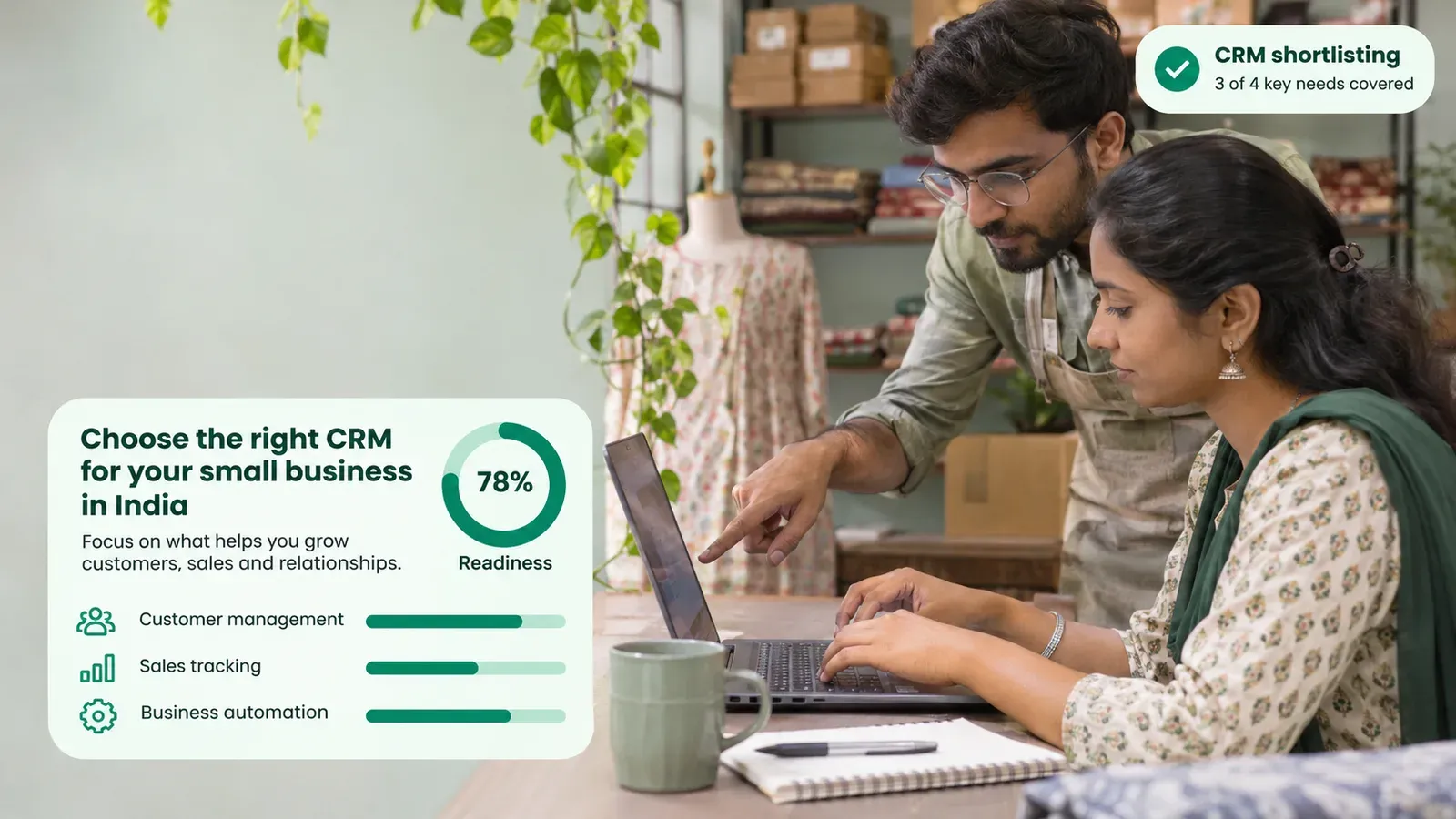
The right CRM for a small business in India is the one your team will use every day, that makes quotes and invoices your accountant can accept, and that keeps customer details safe. Before comparing features, check five things: GST on documents, rupee pricing, phone use, Indian numbers and data protection. This guide sets out each one, for owners moving off notebooks, Excel and WhatsApp chats.
Key takeaways
- Write down how an enquiry becomes a paid invoice today, then choose a CRM that follows those steps.
- Check that quotes and invoices show GST the way the law asks, and let your accountant review a sample.
- Prefer a price in rupees with GST shown, and count every user you will add.
- Test it on a phone, on site, with real enquiries, before you decide.
- Ask how customer data is kept safe, because the DPDP Act now covers what you hold.
Start with how your business works today
Most small businesses already have a system. It is just spread out: a notebook by the phone, an Excel sheet of customers, quotes typed in Word, and the rest in WhatsApp. The trouble starts when a lead sits in one person’s chat and nobody else can see it.
Before you look at any CRM, write your steps on one page. Who takes the enquiry? Who visits or calls back? Who sends the quote, and who follows up the payment? A good CRM fits these steps. A poor fit makes your team keep the old notebook as well.
| Today | What goes wrong | What a CRM should do |
|---|---|---|
| Notebook by the phone | Enquiries get missed or lost | One list of every enquiry, with an owner |
| Excel customer sheet | Two versions, old numbers | One customer record everyone shares |
| Quotes in Word | Wrong rates, no history | Quotes made from the customer record |
| WhatsApp chats | Work lost when staff leave | Notes and next steps kept on the lead |
| Payment memory | Late payers not chased | A list of what is due and overdue |
Check that quotes and invoices are GST-ready
If you are registered under GST, a tax invoice must carry set details. Rule 46 of the CGST Rules lists them. They include your name, address and GSTIN, a serial number and date, the customer’s details and GSTIN where they are registered, the HSN or SAC code, the taxable value, and the rate and amount of tax.
Ask three questions of any CRM:
- Can I set my tax rates once and apply the right one to each line?
- Does the invoice show the tax on each item and in total?
- Can my accountant get the figures out easily for returns?
If you move goods, remember the e-way bill. Under the CGST Rules, an e-way bill is usually needed when a consignment is worth more than 50,000 rupees, with some exceptions and state rules. Keep the invoice number and value clear on every invoice, so the e-way bill can be made from it without retyping.
Some business customers deduct TDS before they pay you. The invoice stays at its full value, and the money that arrives is less. Your CRM should let you record a part payment against an invoice, so the balance is clear and you can match it later with the TDS certificate.
Look at the price in rupees, and the real total
A price shown in dollars can change with the exchange rate each month. A price in rupees, with GST shown on the bill, is easier to budget for. A proper GST invoice also lets you claim input tax credit where you are eligible.
Work out the full cost for a year, not just the first month:
| Question | Why it matters |
|---|---|
| Is the price per user or per business? | Five users can cost five times more |
| Is GST added on top? | 18 percent more if it is not included |
| What is in each plan? | Invoicing or reminders may sit in a higher plan |
| Is there a yearly price? | It can be lower, but it is paid in advance |
| What does setup cost? | Some tools charge to bring in your data |
Test it on a phone, on site
In India, a lot of business happens away from the desk: at a customer’s home, in a warehouse, on a site visit or in a car between meetings. If the CRM is hard to use on a phone, your team will not update it, and the data goes stale.
Check that a salesperson can add an enquiry, look up a customer, see today’s tasks and record a payment from a phone in under a minute. If your team works where the signal is weak, ask whether the CRM works without one, and what happens to changes made offline.
Make sure it handles Indian phone numbers
Your customers’ phone number is the most used field in your CRM. Indian mobile numbers have ten digits, and are written with the country code +91 for calls and messages from other countries. Mixed formats (“98200 12345”, “+919820012345”, “098200 12345”) create duplicates and make searching slow.
Agree one format before you bring data in, and clean your Excel sheet first. A CRM should let you search by number and should warn you when the same customer is added twice.
Ask how customer data is protected
The Digital Personal Data Protection Act 2023 covers personal data of people in India, which is what a CRM holds: names, numbers, addresses and notes. The government notified the DPDP Rules in November 2025, with an 18-month period for phased compliance. They ask businesses to give a clear consent notice for what they collect, to keep data safe and to be accountable for its use.
This is not legal advice, and you should take your own. But a CRM can help with the basics:
- Each person sees only the records their role needs.
- Customer data sits in one place, not copied across phones and chats.
- You can find, correct or remove a customer’s details when asked.
The MSME payment rules matter too. If your customer is a business and you are a registered micro or small enterprise, the MSMED Act says they must pay within the term agreed in writing, and that term cannot exceed 45 days. Since the Finance Act 2023, section 43B(h) of the Income-tax Act also affects when such a buyer can claim the cost as a deduction. A CRM that shows every invoice’s due date helps you follow up on time and politely.
Doing it in iCRM
These features are in iCRM for small businesses in India, across most trades:
- Lead management. Keep every enquiry in one list, with who asked, what they need and who is following it up.
- Customer management. Every customer in one place, with their details, history and open work, and a search for any customer.
- Tax management and invoicing. Set your tax rates once, apply the right rate to each item, and see the tax on every invoice, created from the customer’s own record.
- Payment tracking. Record payments, including part payments, against invoices, and see what is overdue and who to follow up.
- Task management and calendar. Give every piece of work an owner and a due date, and see visits, calls and deadlines on one calendar.
- Team messaging and document sharing. Keep team chat and files with the job and the customer they belong to, so work does not live in personal chats.
A CRM for small business checklist
- Write down how an enquiry becomes a paid invoice in your business.
- Clean your Excel sheet and agree one format for phone numbers.
- Send a sample GST invoice from the CRM to your accountant.
- Work out the yearly cost in rupees for every user, with GST.
- Test it on a phone, on site, with ten real enquiries.
- Check that you can record a part payment after TDS.
- Ask how access is limited and how customer data is kept safe.
- Set a date to stop using the notebook for new enquiries.
Sources
Related articles
-

Client approval process for creative agencies in India
Agree the brief, cap revision rounds, get every sign-off in writing and bill against approved work, so feedback on email and WhatsApp stops running on forever.
- Checklist
- 3 tables
- 6 questions answered
-
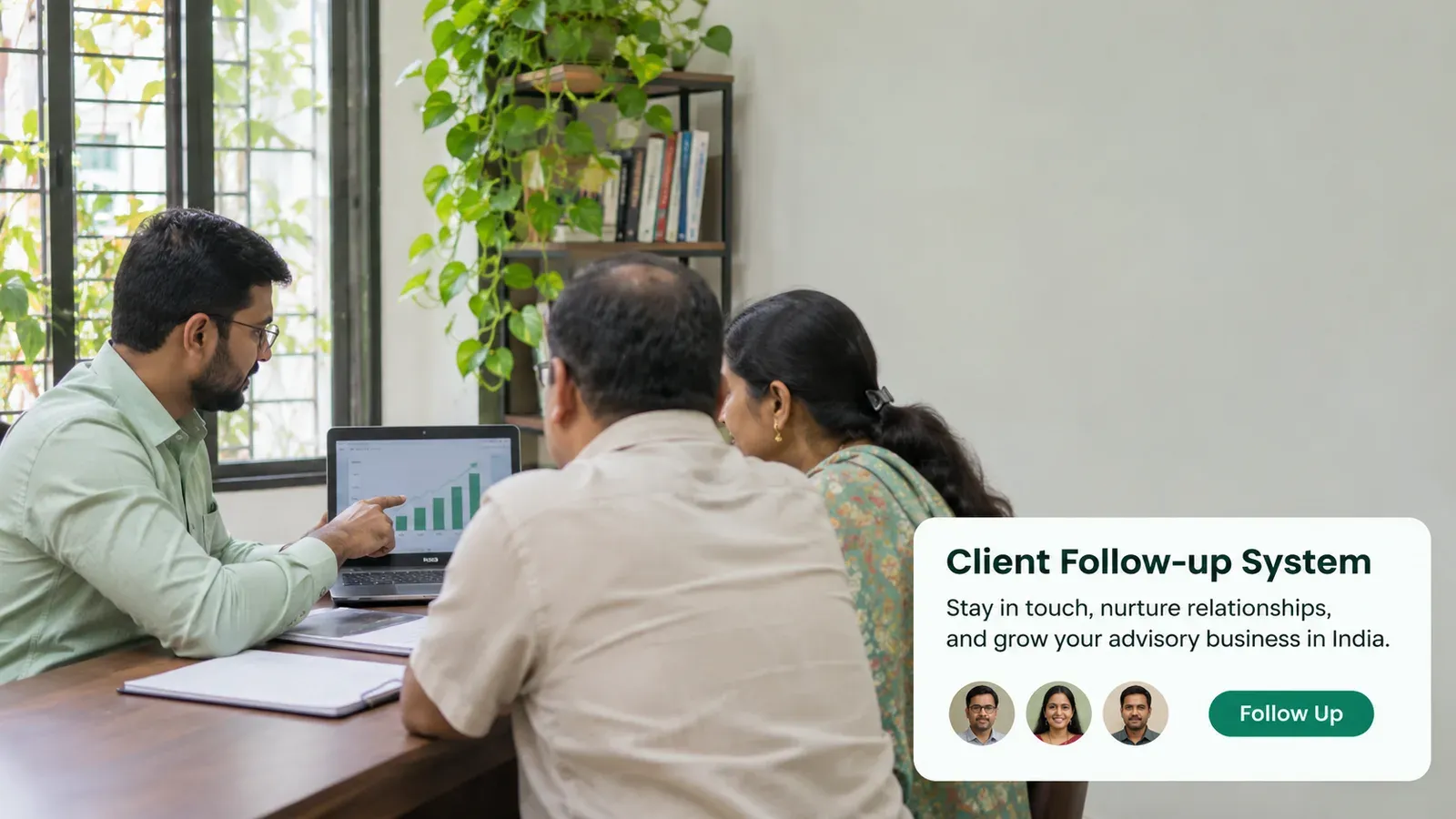
Client follow-up system for financial advisors in India
Put KYC papers, policy renewals, SIP reviews and birthday calls on dated reminders, so an advisor with hundreds of clients never misses a due date.
- Checklist
- 1 table
- 6 questions answered
-
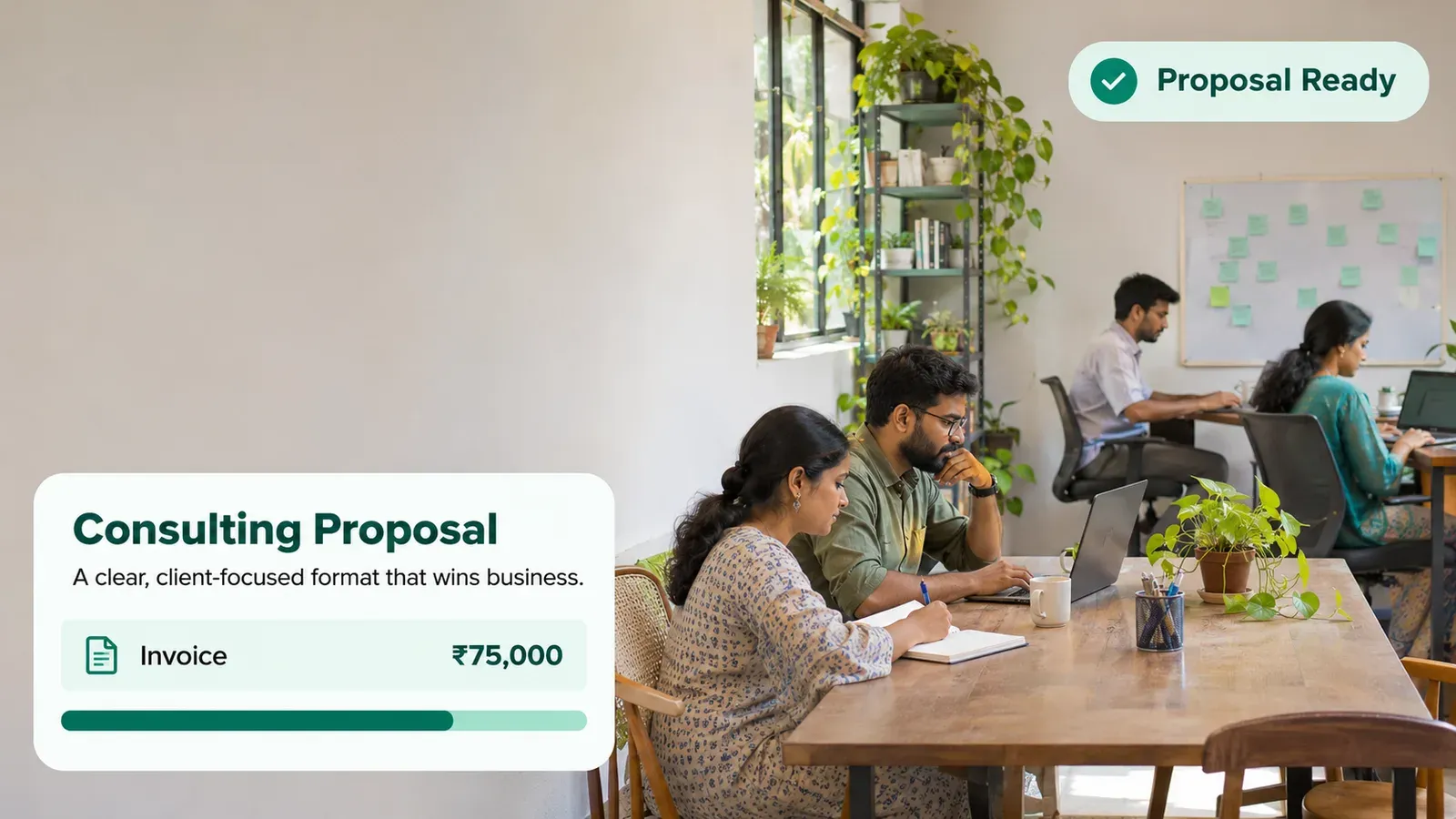
Consulting proposal format: how to write one that wins
A consulting proposal that wins is short and follows one format the client can check fast. Problem, scope, timeline, fees with GST, milestones and sign-off.
- Checklist
- 4 tables
- 6 questions answered
Recognized with numerous awards
Support, security, uptime and results, with the figures behind each badge.







FAQ
Frequently asked questions
Straight answers to what people ask most about iCRM.
Set up for your industry
Pick yours and its features come ready.
- Farm Businesses
- Automotive Dealers
- Consulting Firms
- Online Retail
- Education Institutes
- Energy Companies
- Financial Services
- Healthcare Clinics
- Hospitality Businesses
- Law Firms
- Logistics Companies
- Manufacturing Companies
- Media Agencies
- Nonprofit Organisations
- Real Estate
- Technology Companies
-
What should a small business in India look for first in a CRM?
Start with your own work. Check that it holds every enquiry and customer in one list, makes quotes and invoices with GST shown correctly, tracks who has paid, and is easy to use on a phone. Price and extras come after that.
-
Does my CRM need to handle GST?
If you are registered under GST, your tax invoices must carry certain details, such as your GSTIN, the customer's GSTIN for business sales, HSN or SAC codes and the tax rate and amount. A CRM that sets tax rates once and applies them to each item saves errors. Your accountant should confirm the exact format.
-
Can I move from Excel and WhatsApp to a CRM without losing data?
Yes, if you plan it. Clean your Excel sheet first, agree one format for names and phone numbers, then bring customers in. Keep your WhatsApp chats, but note each enquiry in the CRM as it arrives, so the next step and its owner are written down.
-
Does the DPDP Act apply to a small business CRM?
The Digital Personal Data Protection Act 2023 applies to businesses that handle personal data of people in India, and a CRM is full of it. The DPDP Rules 2025 bring duties in over 18 months, such as clear consent notices and security safeguards. Take advice on what applies to you.
-
Should a CRM price be in rupees?
It helps. A price in rupees, with GST shown, is easier to budget for and to claim input tax credit on, where you are eligible. A price in dollars can change with the exchange rate each month.
-
How do I know if a CRM will suit my team?
Try it on real work for a week. Add ten live enquiries, send two quotes, record one payment and ask the person who uses it most on site whether it is quicker than the old way. Their answer tells you more than any feature list.
Get started with iCRM
Leads, quotes, work, invoices and payments in one app, set up for the way your industry works.
- 99% Uptime guarantee
- ISO ISO-aligned security
- 24/7 Response support
- GDPR GDPR compliant
- SSL SSL encrypted
-
16
Industries Each with its own features
-
47
Features Across those industries
-
11
Areas of work From leads to payments
-
3
Editions India, France and UAE