Industry insights
Client follow-up system for financial advisors in India
Put KYC papers, policy renewals, SIP reviews and birthday calls on dated reminders, so an advisor with hundreds of clients never misses a due date.
Written by The iCRM team
Published 6 min read
- 15 days Grace period on monthly premiums
- 30 days Grace on yearly or quarterly modes
- 3 years Validity of an AMFI ARN
- 6 months Before expiry, when ARN can be renewed
On this page

An advisor with hundreds of clients does not lose them to a better fund. They lose them to a missed renewal, a KYC paper that was never chased, or a year with no call. The cure is a simple routine: four kinds of follow-up, each with a date, each on a reminder.
Key takeaways
- Follow up four things for every client: KYC papers, policy renewals, SIP reviews and personal dates.
- Give every follow-up a date the day you learn it, not the week it falls due.
- Remind renewals early, well before the grace period starts.
- Review SIPs at least once a year and after any big life change.
- Keep client data with care: tell clients what you keep and why.
Why advisors need a system, not a memory
Most insurance and mutual fund advisors in India work from a phone. Clients call, message and drop in at any hour. Dates live in a diary, a spreadsheet, a WhatsApp chat and the advisor’s head.
That works for fifty clients. It breaks at three hundred. One family may hold a term plan, a health policy, a motor policy and four SIPs, each with its own date. Miss one and the client feels forgotten, even if everything else was perfect.
A system means each date is written down once, in one place, with a reminder. Then the morning starts with a list of who to call today, not a search for what you might have missed.
The four follow-ups every client needs
1. KYC papers
Mutual fund KYC in India now has a status. Since April 2024, KYC Registration Agencies (KRAs) mark each investor as Validated, Registered or On Hold. A Validated client can invest in any scheme. A Registered client can keep using existing folios but must complete KYC again, usually with Aadhaar, to invest in a new fund. On Hold usually means a problem with the papers.
Check each client’s status with their PAN on a KRA website, note it on their record, and set a reminder to help anyone who is not yet Validated. A client who wants to start a new SIP and finds their KYC on hold is a client who may go elsewhere.
2. Policy renewals
A life policy renewal has a grace period: generally 15 days for monthly premiums and 30 days for yearly, half-yearly and quarterly modes, counted from the first unpaid premium. Health insurance now follows a similar split. Cover during the grace period depends on the policy, so never treat it as a safety net.
The advisor’s job is to make sure the client pays on time, not in the grace period. Remind early, and give the client time to arrange the money or change the cover.
3. SIP and goal reviews
A SIP started for a child’s education five years ago may no longer match the goal. A review once a year keeps the plan honest. Ask what has changed, whether the amount still fits, and whether a step-up makes sense. Note what you discussed and agreed, so the next review starts where this one ended.
4. Birthdays and personal dates
A birthday call is not a sales call. It is a reason to speak to the client in a good year, when nothing is due. Anniversaries, a child’s admission, a retirement date: each is a natural moment to ask how things are, and often the moment a new need comes up.
A yearly follow-up calendar
Set these the day a client joins, and roll them on each year.
| Follow-up | When to start | Then | Channel |
|---|---|---|---|
| Policy renewal | 30 days before due | 7 days before, on the due date | Call, then message |
| KYC check | When onboarding, then yearly | When a new investment is planned | Message with the steps |
| SIP review | Once a year | After a big life change | Meeting or call |
| Birthday | On the day | Once a year | Call |
| Your own ARN | 6 months before expiry | Each month until renewed | Your own reminder |
The last row matters too. An AMFI Registration Number (ARN) is valid for three years and can be renewed up to six months before it expires. AMFI’s guide says commission is suspended once an ARN expires, so put your own renewal, and your team’s EUINs, on the same list as your clients’.
Keep the client’s papers and history together
A follow-up is only as good as what you know when you call. Before a renewal call, you want the policy, last year’s premium, any claim and the notes from your last talk. Before a SIP review, you want the goals and the amounts.
Keep each client’s papers on their record: KYC copies, policy schedules, nominee details, signed forms. Keep a short note after every call. When a colleague takes the call while you are away, they can pick up without asking the client to repeat everything.
Take care of client data
Clients trust advisors with their PAN, Aadhaar, bank details and health history. India’s Digital Personal Data Protection Act 2023 asks businesses to use personal data for a clear purpose, with the person’s consent, and to keep it safe. Its rules were notified in November 2025 and come into force in phases.
Some simple habits help:
- Tell clients what you keep and why when they join.
- Limit who on your team can see each client’s records.
- Do not keep papers you no longer need.
- Take advice on your own duties under the Act and your regulator’s rules.
Doing it in iCRM
- Customer management. Every client in one place, with their policies, SIPs, notes and open work on one record.
- Automated reminders. Set a renewal, a review or a birthday reminder once, and get reminded on time without an alarm.
- Document expiry tracking. Add an end date to a policy or your own ARN and see what runs out soon.
- Calendar and task management. See review meetings and calls for the week, each with an owner and a due date.
- Client messaging and the customer portal. Send renewal reminders and KYC steps, and share papers with a client in their own place.
- E-signatures. Get forms signed on screen, with the signed copy kept on the client’s record.
- Private notes and record-level permissions. Keep call notes within your team, and choose who can see each client’s details.
A client follow-up checklist
- Every client’s policies have a renewal date and a reminder 30 days ahead.
- Every mutual fund client’s KYC status is noted on their record.
- Clients who are not Validated have a reminder to complete KYC.
- Every client has a yearly SIP and goal review on the calendar.
- Birthdays and key family dates are saved with a reminder.
- Each call ends with a short note and a next date.
- Your own ARN and your team’s EUINs have a renewal reminder six months ahead.
- Clients know what data you keep and why.
Sources
Related articles
-

Consulting proposal format: how to write one that wins
A consulting proposal that wins is short and follows one format the client can check fast. Problem, scope, timeline, fees with GST, milestones and sign-off.
- Checklist
- 4 tables
- 6 questions answered
-
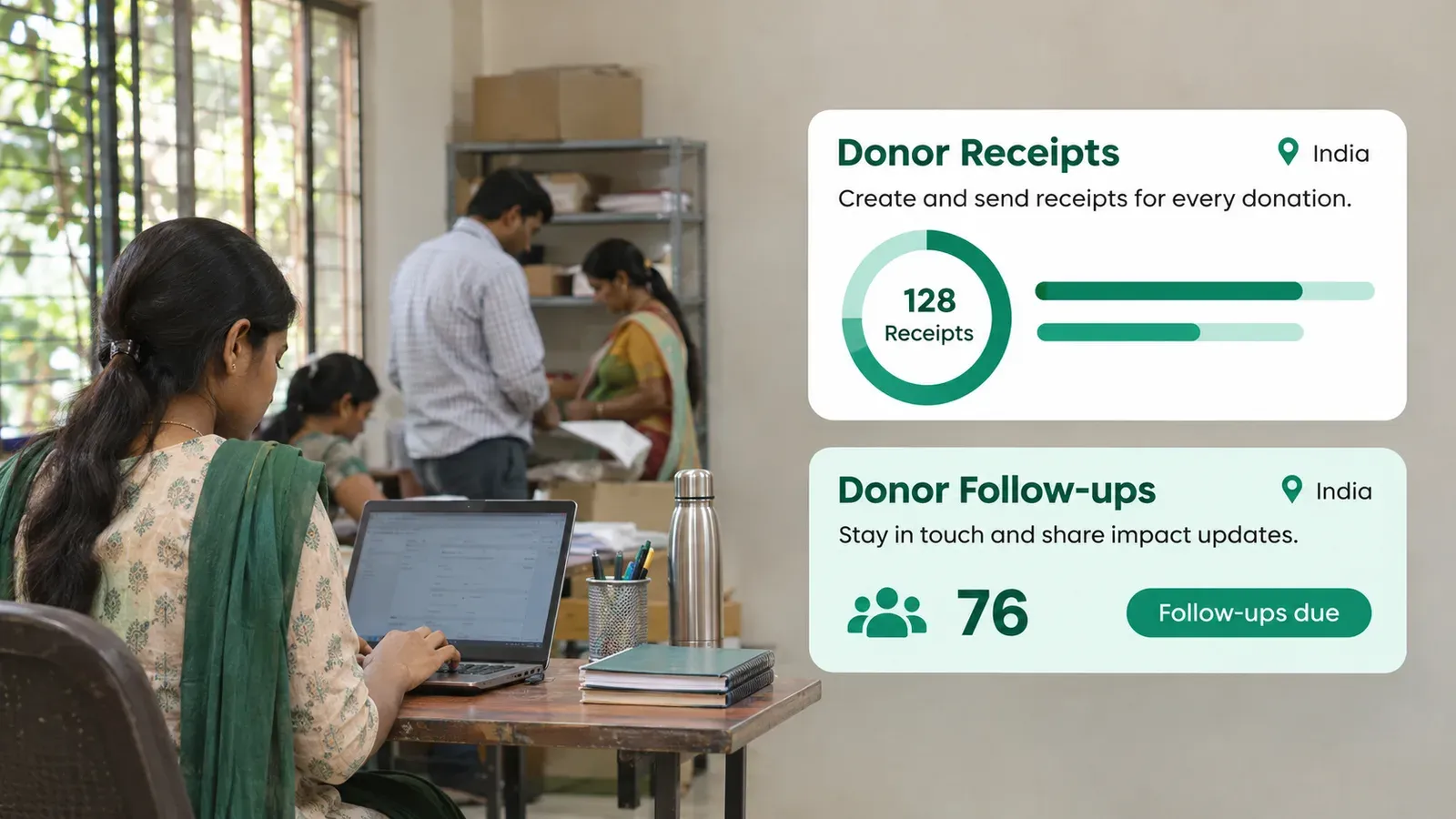
Donor management for NGOs in India: receipts and follow-ups
Keep one record per donor with their PAN, every gift and its receipt, so Form 10BD is easy in May and every donor is thanked and updated on time.
- Checklist
- 2 tables
- 6 questions answered
-
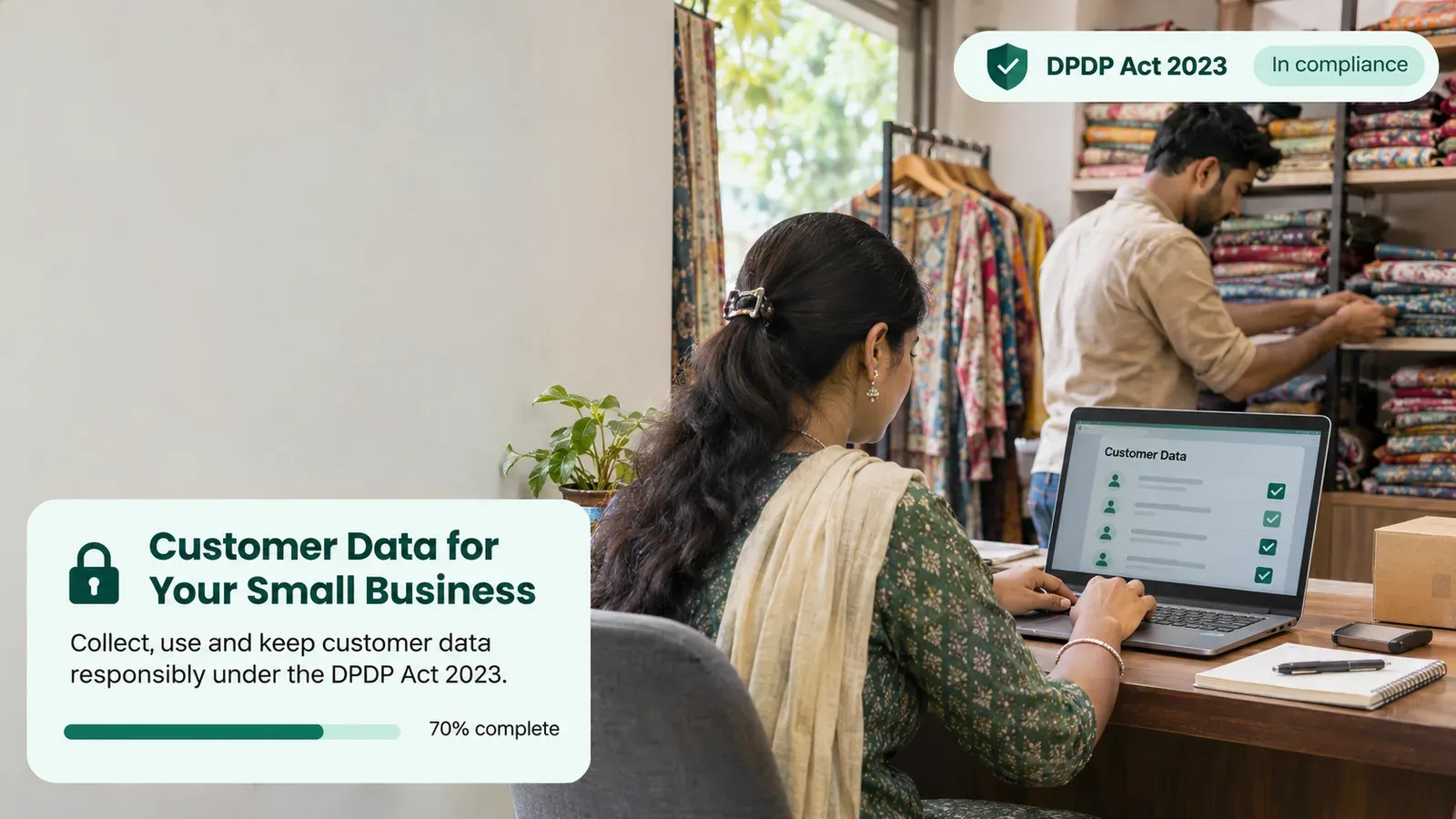
DPDP Act 2023 for small business: what to do with customer data
The DPDP Act 2023 asks a small business to collect customer data with clear consent, use it for a stated purpose, keep it safe and delete it when done.
- Checklist
- 2 tables
- 6 questions answered
Recognized with numerous awards
Support, security, uptime and results, with the figures behind each badge.














FAQ
Frequently asked questions
Straight answers to what people ask most about iCRM.
Set up for your industry
Pick yours and its features come ready.
- Farm Businesses
- Automotive Dealers
- Consulting Firms
- Online Retail
- Education Institutes
- Energy Companies
- Financial Services
- Healthcare Clinics
- Hospitality Businesses
- Law Firms
- Logistics Companies
- Manufacturing Companies
- Media Agencies
- Nonprofit Organisations
- Real Estate
- Technology Companies
-
What should a financial advisor follow up with clients every year?
Four things at least. KYC status and papers, every policy renewal date, a review of each client's SIPs and goals, and personal dates such as birthdays and anniversaries. Put each on a dated reminder so none waits on memory.
-
How long is the grace period for a life insurance renewal premium in India?
For life insurance it is generally 15 days for monthly premiums and 30 days for yearly, half-yearly and quarterly modes, counted from the first unpaid premium. Always check the policy wording, as cover during the grace period depends on the policy.
-
How do I know if a mutual fund client's KYC needs attention?
Check the client's KYC status with their PAN on a KRA website. Validated allows new investments, Registered allows only existing folios, and On Hold usually means a document problem the client must fix before investing.
-
How early should I remind a client about a policy renewal?
Start about 30 days before the due date, then remind again a week before and on the due date. That leaves time for a cheque, a mandate or a change of cover before the grace period is needed.
-
How often should I review a client's SIPs?
At least once a year, and whenever the client's life changes, such as a new job, a marriage, a child or a big expense. A short review keeps the SIPs tied to the goals they were started for.
-
Do I need consent to store client details in a CRM?
India's DPDP Act 2023 asks businesses to collect personal data for a clear purpose with the person's consent, and its rules come into force in phases. Tell clients what you keep and why, and take advice on your own duties.
Get started with iCRM
Leads, quotes, work, invoices and payments in one app, set up for the way your industry works.
- 99% Uptime guarantee
- ISO ISO-aligned security
- 24/7 Response support
- GDPR GDPR compliant
- SSL SSL encrypted
-
16
Industries Each with its own features
-
47
Features Across those industries
-
11
Areas of work From leads to payments
-
3
Editions India, France and UAE