Industry insights
Client approval process for creative agencies in India
Agree the brief, cap revision rounds, get every sign-off in writing and bill against approved work, so feedback on email and WhatsApp stops running on forever.
Written by The iCRM team
Published 8 min read
- 2 rounds Of revisions inside the fee
- 1 approver Named by the client for each job
- 30 days To issue a GST invoice for a service
- 45 days Longest agreed MSME payment term
On this page
- Key takeaways
- Why approvals go wrong in Indian agencies
- Step 1: agree the brief and the rounds in writing
- Step 2: name one approver and one channel
- Step 3: run each round the same way
- Step 4: get the sign-off in writing
- Step 5: bill against approved work
- Doing it in iCRM
- A client approval process checklist
- Sources

A good client approval process for an agency is short and written down. Agree the brief and the number of revision rounds before work starts, name one approver on the client side, collect every sign-off in writing, and raise each invoice only against work the client has approved. That stops the endless loop of feedback on email and WhatsApp.
Key takeaways
- Put the brief, the deliverables and the number of revision rounds in the signed proposal.
- Ask the client to name one approver, with authority to say yes.
- Collect feedback once per round, in one consolidated list.
- Record every approval in writing and keep it with the job.
- Bill in milestones that follow approved work, with GST on a proper tax invoice.
Why approvals go wrong in Indian agencies
Most agencies do not lose money on the first draft. They lose it on the sixth. Feedback arrives from the founder on WhatsApp, from the marketing head by email and from a brand manager on a call. Each one contradicts the last, and nobody can say which version was approved.
Three habits cause most of this:
- No limit on rounds. If the proposal says “revisions as required”, the client will take it at its word.
- Too many voices. When five people can give feedback, the agency becomes the referee.
- Approval by silence. A thumbs-up emoji in a group chat is easy to forget and hard to find later.
The fix is a routine that both sides agree to before the work starts.
Step 1: agree the brief and the rounds in writing
Start every job with a written proposal that the client signs. It should set out the scope, the deliverables, the dates, the fee and how revisions work.
Be precise about what a round is. A round is one consolidated set of feedback from the approver on one version, followed by one revised version from the agency. New ideas that change the brief are not a revision: they are a change of scope, with its own quote.
| Item in the proposal | What to write |
|---|---|
| Deliverables | Each file, size and format, for example a logo in three versions and a brand sheet |
| Revision rounds | How many are included, for example two per stage |
| Extra rounds | The fee for each round beyond those included |
| Approver | The name of the one person who signs off |
| Response time | How many working days the client has to send feedback |
| Ownership | What rights pass to the client, and when |
On ownership, be careful. Under the Copyright Act 1957, an assignment of copyright is valid only if it is in writing and signed. Many agencies assign the rights in final approved work on full payment and keep the rights in rejected concepts. Ask a lawyer to word this clause for your agency.
Step 2: name one approver and one channel
Ask the client to name a single approver for the job. Others can review the work, but their comments should reach you through that person, as one list.
Agree on one channel for feedback and approvals. It can be email or a shared link, but it should be one place. If a comment comes in on WhatsApp, move it into the agreed place and reply there. That keeps the record whole.
A comment that is not in the agreed place has not been given yet.
Step 3: run each round the same way
Every round should follow the same steps, so nobody has to think about it.
- Share the version with a number, for example “v2”, and the date feedback is due.
- The approver sends one consolidated list of changes.
- You confirm what you will change, and flag anything outside the brief.
- You share the revised version and record the round as used.
Keep a simple log for each deliverable. When the client asks for a fourth round on a two-round fee, you can show them the log instead of arguing.
| Round | Version | Shared | Feedback due | Status |
|---|---|---|---|---|
| 1 | v1 | Monday | Wednesday | Changes received |
| 2 | v2 | Friday | Tuesday | Changes received |
| Extra | v3 | Thursday | Monday | Quoted and accepted |
| Final | v4 | Wednesday | Friday | Approved in writing |
Step 4: get the sign-off in writing
When the approver is happy, ask for a clear written approval of the exact version: “Approved, v4 of the festive campaign key visual, for print and social”. A reply by email works. For larger stages, such as the final brand identity, an e-signature on a short approval note is better.
India’s Information Technology Act 2000 recognises contracts formed by electronic means, and the Indian Contract Act still sets the basic rules. In practice, a clear written approval saved with the job is what settles most disputes. A screenshot of a chat is weaker than a signed note in one place.
Client files often hold personal data, such as customer lists for a campaign. The Digital Personal Data Protection Act 2023 sets duties for handling such data, so share and store those files only where they belong, with the people who need them.
Step 5: bill against approved work
Billing should follow approvals, not the calendar. Split the fee into milestones that each end with a sign-off, for example an advance on signing, a part on concept approval and the rest on final files.
| Milestone | Approval that triggers it | Part of the fee |
|---|---|---|
| Start | Signed proposal | Advance |
| Concept | Written approval of the chosen route | Second part |
| Final | Written approval of final files | Balance |
| Extra rounds | Accepted quote for the extra work | As quoted |
A few points for India:
- GST. Advertising and most creative services are generally taxed at 18%. Put your GSTIN, the client’s GSTIN where they have one, the SAC and the tax on each tax invoice. A tax invoice for a service is generally due within 30 days of the supply.
- TDS. Many business clients deduct TDS from your payment. The section and rate depend on the nature of the work, so check each client’s deduction against Form 26AS and ask your accountant when it looks wrong.
- MSME terms. If your agency is registered as a micro or small enterprise, the MSMED Act limits an agreed payment term to 45 days from acceptance of the service, and sets interest on late payment. Write your payment term in the proposal.
- E-way bills. These apply to moving goods, not to creative services. If you deliver printed material yourself, check whether one is needed.
The tax points here are general. Your chartered accountant should confirm how they apply to your agency.
Doing it in iCRM
- Proposals and estimates. Write the scope, the deliverables, the revision rounds and the fee in a proposal, and keep every version together.
- E-signatures. Let the client sign the proposal and each approval on screen, and keep the signed copy with the deal.
- Project management and Kanban boards. Run each job as a project, with a card for each deliverable moving from draft to review to approved.
- Client project tracking. Let the client see where their job stands, so status questions do not need a call.
- Task management and the calendar. Give each round an owner and a due date, and see feedback deadlines for the week.
- File management and document sharing. Keep each numbered version with the job, and share the right file with the right person.
- Team messaging. Keep the team’s discussion of feedback inside iCRM, beside the job.
- Invoicing, tax management and payment tracking. Raise each milestone invoice with GST set once, and see which invoices are paid, part-paid or overdue.
A client approval process checklist
- Signed proposal with scope, deliverables, rounds and fee.
- Fee for extra rounds written down.
- One named approver and one channel for feedback.
- Each version numbered and dated.
- Feedback collected once per round, in one list.
- Every round logged as used.
- Final approval of the exact version in writing.
- Ownership of rights stated in the contract.
- Each invoice tied to an approved milestone, with GST.
- Payment term written in the proposal.
Sources
- The Copyright Act 1957, section 19: mode of assignment (AdvocateKhoj)
- The Information Technology Act 2000, section 10A (LawX)
- Validity of electronic contracts in India (Mondaq)
- The Digital Personal Data Protection Act 2023 (India Code)
- CGST Rules 2017, rule 47: time limit for issuing a tax invoice (GSTZen)
- GST on the advertising sector (ClearTax)
- CBDT Circular No. 715 of 8 August 1995 on TDS (Income Tax Department)
- MSMED Act 2006: legal framework (Office of the DC MSME)
Related articles
-

Client follow-up system for financial advisors in India
Put KYC papers, policy renewals, SIP reviews and birthday calls on dated reminders, so an advisor with hundreds of clients never misses a due date.
- Checklist
- 1 table
- 6 questions answered
-

Consulting proposal format: how to write one that wins
A consulting proposal that wins is short and follows one format the client can check fast. Problem, scope, timeline, fees with GST, milestones and sign-off.
- Checklist
- 4 tables
- 6 questions answered
-
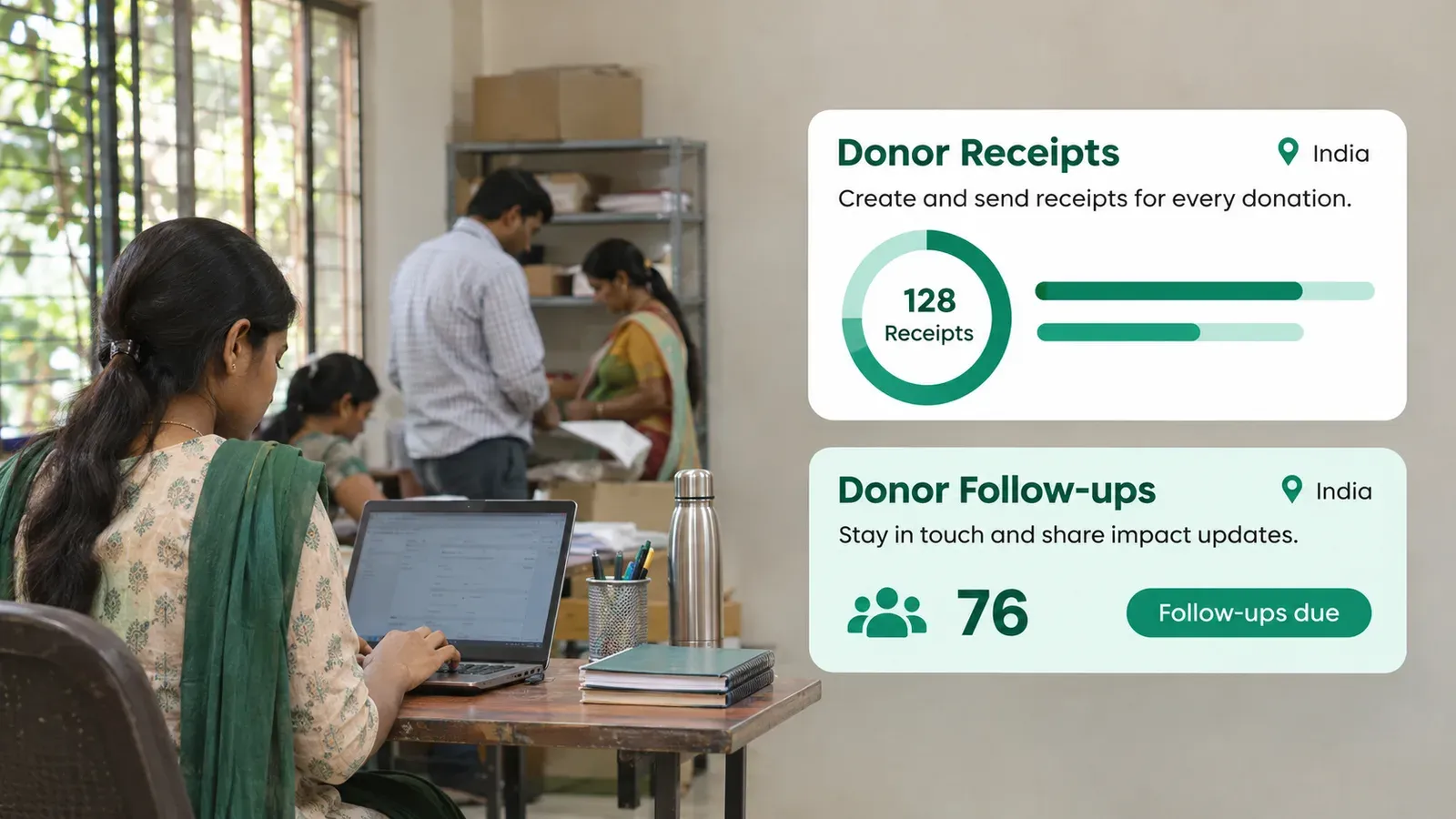
Donor management for NGOs in India: receipts and follow-ups
Keep one record per donor with their PAN, every gift and its receipt, so Form 10BD is easy in May and every donor is thanked and updated on time.
- Checklist
- 2 tables
- 6 questions answered
Recognized with numerous awards
Support, security, uptime and results, with the figures behind each badge.















FAQ
Frequently asked questions
Straight answers to what people ask most about iCRM.
Set up for your industry
Pick yours and its features come ready.
- Farm Businesses
- Automotive Dealers
- Consulting Firms
- Online Retail
- Education Institutes
- Energy Companies
- Financial Services
- Healthcare Clinics
- Hospitality Businesses
- Law Firms
- Logistics Companies
- Manufacturing Companies
- Media Agencies
- Nonprofit Organisations
- Real Estate
- Technology Companies
-
How many revision rounds should a creative agency include?
Most agencies include two rounds in the fee and charge for more. The number matters less than writing it in the proposal, defining what one round is, and counting rounds openly on every job.
-
Is a WhatsApp or email approval valid in India?
A written approval by email or message is a record of what the client agreed, and the IT Act recognises contracts formed electronically. For important sign-offs, use an e-signature or a clear written reply and keep it with the job.
-
Who should approve creative work on the client side?
One named person with the authority to say yes. Others can comment, but their feedback should reach the agency through that person in one consolidated list per round.
-
When should an agency raise the invoice for approved work?
Tie invoices to milestones the client has signed off, such as the approved concept or final files. For GST, a tax invoice for services is generally due within 30 days of the supply.
-
Who owns the copyright in work an agency makes for a client?
It depends on the agreement. Under the Copyright Act 1957, an assignment of copyright must be in writing and signed, so state in the contract what passes to the client and when, often on full payment.
-
What happens if the client pays an MSME agency late?
If the agency is registered as a micro or small enterprise, the MSMED Act caps an agreed payment term at 45 days from acceptance and sets interest on late payment. Take advice before relying on it.
Get started with iCRM
Leads, quotes, work, invoices and payments in one app, set up for the way your industry works.
- 99% Uptime guarantee
- ISO ISO-aligned security
- 24/7 Response support
- GDPR GDPR compliant
- SSL SSL encrypted
-
16
Industries Each with its own features
-
47
Features Across those industries
-
11
Areas of work From leads to payments
-
3
Editions India, France and UAE