Industry insights
Site visit follow-up: turning property visits into bookings
Thank the buyer within the hour, send the cost sheet the same day, plan a second visit for the family and ask for the booking amount within ten days.
Written by The iCRM team
Published 7 min read
- 1 hour To send the thank-you message
- 24 hours To send the full cost sheet
- 10 days From first visit to booking ask
- 10 percent RERA cap before a registered agreement
On this page
- Key takeaways
- What to do in the first hour
- The cost sheet: clear, complete and on time
- The second visit: bring the people who decide
- Asking for the booking amount
- A ten-day plan after every site visit
- Channel partners: one owner for every visit
- Doing it in iCRM
- A site visit follow-up checklist
- Sources
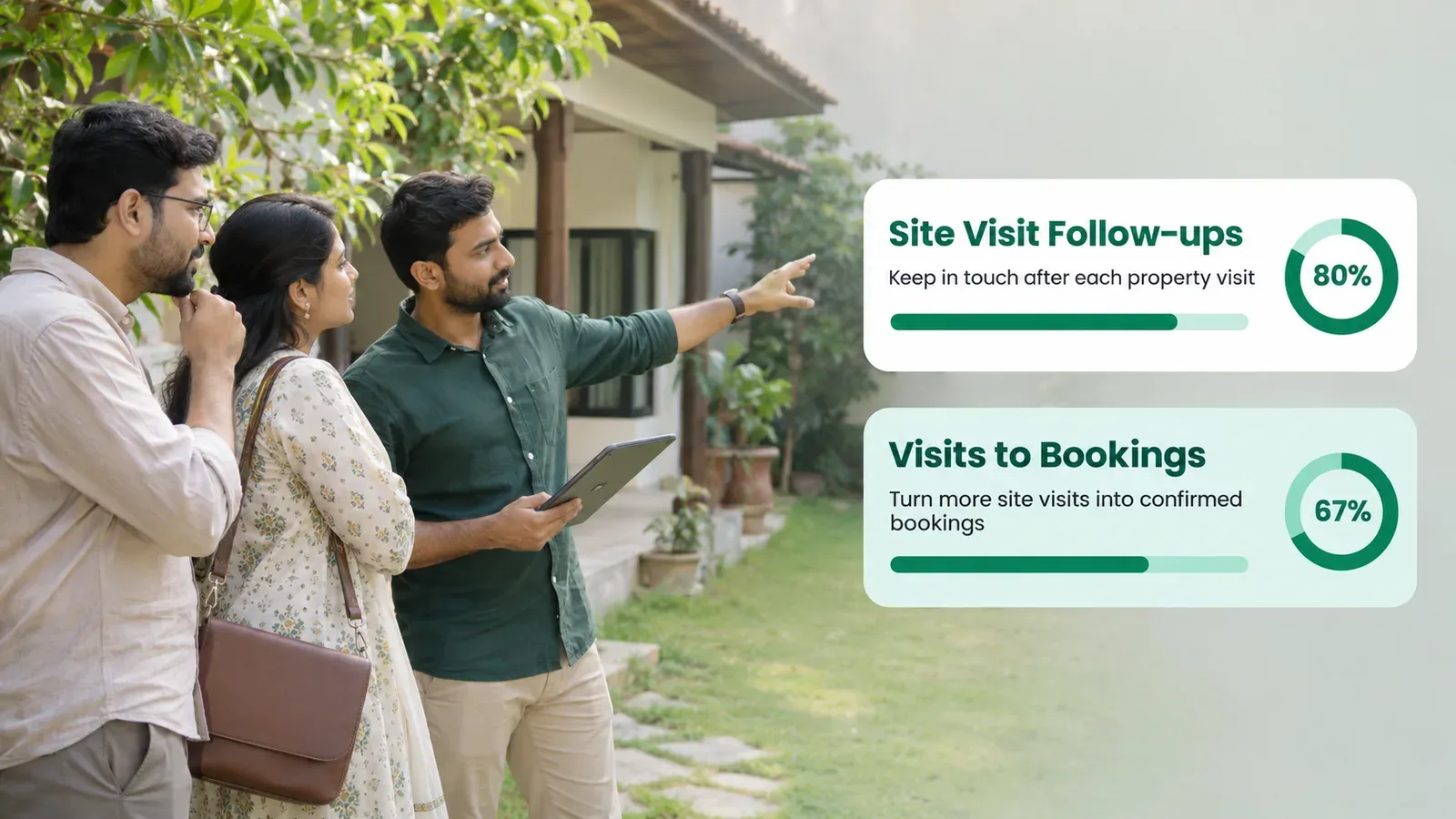
Most site visits do not turn into bookings because the follow-up stops at the gate. The buyer liked the flat, but the cost sheet came late, the family never saw it and nobody fixed a date for the next step. A plan for the ten days after a visit, kept the same for every buyer, turns more of those visits into booking amounts.
Key takeaways
- Thank the buyer within the hour, with the unit and the next step in writing.
- Send a clear cost sheet within 24 hours, with estimates marked as estimates.
- Plan the second visit for the people who decide: spouse, parents, the person paying.
- Ask for the booking amount within about ten days, and stay inside the RERA limit.
- Give every visit an owner, whether it came direct or through a channel partner.
What to do in the first hour
The buyer is on the way home, talking about what they saw. A short message now keeps your project in that conversation.
Keep it personal and useful. Name the tower and the unit they liked, thank them for their time and say what comes next.
A thank-you message that works
Thank you for visiting the project today. You liked the 2 BHK on the 9th floor, east facing. I’ll send the full cost sheet by tomorrow noon and call you on Thursday to answer the family’s questions.
Add the site’s location pin, the RERA registration number of the project and one or two photos of the unit or the view. Under Section 11 of RERA, the registration number belongs in your advertising anyway, so buyers will look for it.
If the buyer gave their number for follow-up, say how you will contact them. The DPDP Act 2023 asks you to use personal data for the purpose it was given for, so keep messages to this enquiry and stop when they ask you to.
The cost sheet: clear, complete and on time
A vague price is the most common reason a good visit goes quiet. The buyer has to work out the all-in figure alone, and the next builder who sends a clean sheet wins the comparison.
Send it within 24 hours. Put everything on one page, and mark the figures that are estimates.
| Line on the cost sheet | What to show |
|---|---|
| Unit | Tower, floor, unit number, facing |
| Area | Carpet area as defined by RERA |
| Base price | Rate and total |
| Extras | Floor rise, preferred location, car parking, club or maintenance deposit |
| GST | The rate that applies to this unit |
| Stamp duty and registration | An estimate, marked as an estimate |
| Payment plan | Booking amount, agreement stage, construction-linked stages |
| Validity | How long the price and the unit are held |
On GST, under-construction homes carry 1 percent for affordable housing and 5 percent for others, without input tax credit, while a ready home with a completion certificate carries none. Check the rate for each project with your tax adviser, and show it as its own line so the buyer sees the full figure.
If the unit will cost ₹50 lakh or more, add a note that the buyer deducts 1 percent TDS from each payment and deposits it with Form 26QB. Buyers who learn this late often hold up the first instalment.
The second visit: bring the people who decide
In most Indian homes the person who visits first is not the only one who decides. A spouse, parents or a family member who is paying wants to see the flat, the approach road and the neighbourhood.
Ask on the first call who else needs to see it, and fix a date. A weekend slot, with the same sales person who met them first, works for most families.
Prepare for that visit:
- Keep the same unit, or two close options, open and clean.
- Have the approvals, the RERA certificate and a sample agreement for sale ready to show.
- Bring the cost sheet printed, with any changes since the first visit marked.
- Note the questions the family asks. They are the objections you will need to answer before the booking.
Asking for the booking amount
A buyer who has seen the flat twice and has the numbers is ready to be asked. Many are waiting for you to ask.
Be clear about how much, how it is paid and what they get in return: the unit blocked in their name, a receipt and the date for the agreement for sale.
Stay inside the law. Section 13 of RERA says a promoter cannot accept more than 10 percent of the cost of the unit as an advance or application fee before a written agreement for sale is signed and registered. State RERA authorities have penalised builders who took more. Keep the booking amount inside that limit and give a receipt for every payment.
A ten-day plan after every site visit
Plan the touches before the visit, so nobody has to decide each time. Each one should move the buyer one step closer.
| Day | Channel | What happens |
|---|---|---|
| 0 | Thank-you, unit, location pin, RERA number, next step | |
| 1 | Email or WhatsApp | The full cost sheet and payment plan |
| 2 | Call | Answer the family’s questions, fix the second visit |
| 4 to 7 | Second visit | Family sees the unit, approvals and sample agreement |
| 8 | Call | Settle the last questions, confirm the unit is held |
| 10 | Meeting or call | Ask for the booking amount, give the receipt |
If the buyer says not now, set a date to check in again, perhaps after a festival or a loan approval, and keep the unit on their record. If they say no, thank them and close the lead with the reason.
Channel partners: one owner for every visit
Many visits come through brokers and channel partners. Without one owner on your side, the buyer gets two follow-ups or none, and disputes over who brought them start later.
Record who brought the buyer at the gate, before the visit starts. Agree with the partner who sends the cost sheet and who calls, and share the next date with them. When the booking comes, the record already shows whose buyer it was.
A site visit without a next date is a booking you have already started to lose.
The iCRM team
Doing it in iCRM
- Lead capture forms and lead management. Visit sign-ups from your forms land as leads, each with its owner, so no visit goes unrecorded.
- Custom fields. Add the details your sales team needs, such as the unit seen, budget, loan status and the channel partner who brought the buyer.
- Calendar and lead follow-ups. Book the second visit and set the next follow-up date on the lead, so today’s list shows who to call.
- Click-to-call. Call the buyer from their record, with the cost sheet and notes in view.
- Proposals and document sharing. Send the cost sheet as a proposal, keep every version together and share the project’s documents from one place.
- Sales pipeline. Move each buyer from visit to second visit to booking, and spot the ones that have gone quiet.
- Tax management, payment tracking and payment receipts. Apply the GST rate that fits the project, record the booking amount and give the buyer a receipt.
- E-signatures. Get the booking form signed on screen and keep the signed copy with the deal.
- Offline mode. Update the lead on site, even where the signal is poor.
A site visit follow-up checklist
- Every visitor is recorded at the gate, with who brought them.
- A thank-you message goes out within the hour.
- The full cost sheet goes out within 24 hours, estimates marked.
- The second visit is booked for the people who decide.
- The booking amount stays within 10 percent before a registered agreement.
- Every payment gets a receipt.
- Every lead has an owner and a next date.
- Closed leads get a polite last message and a reason.
Sources
- The Real Estate (Regulation and Development) Act, 2016, India Code
- Section 13 of RERA, no deposit or advance before an agreement for sale, Courtbook
- Developers cannot demand an advance of over 10 percent, Haryana RERA, Housing.com
- GST Council, 34th meeting, rates for residential property, PIB release
- TDS on purchase of immovable property, Income Tax Department
- Digital Personal Data Protection Act, 2023, MeitY
Related articles
-
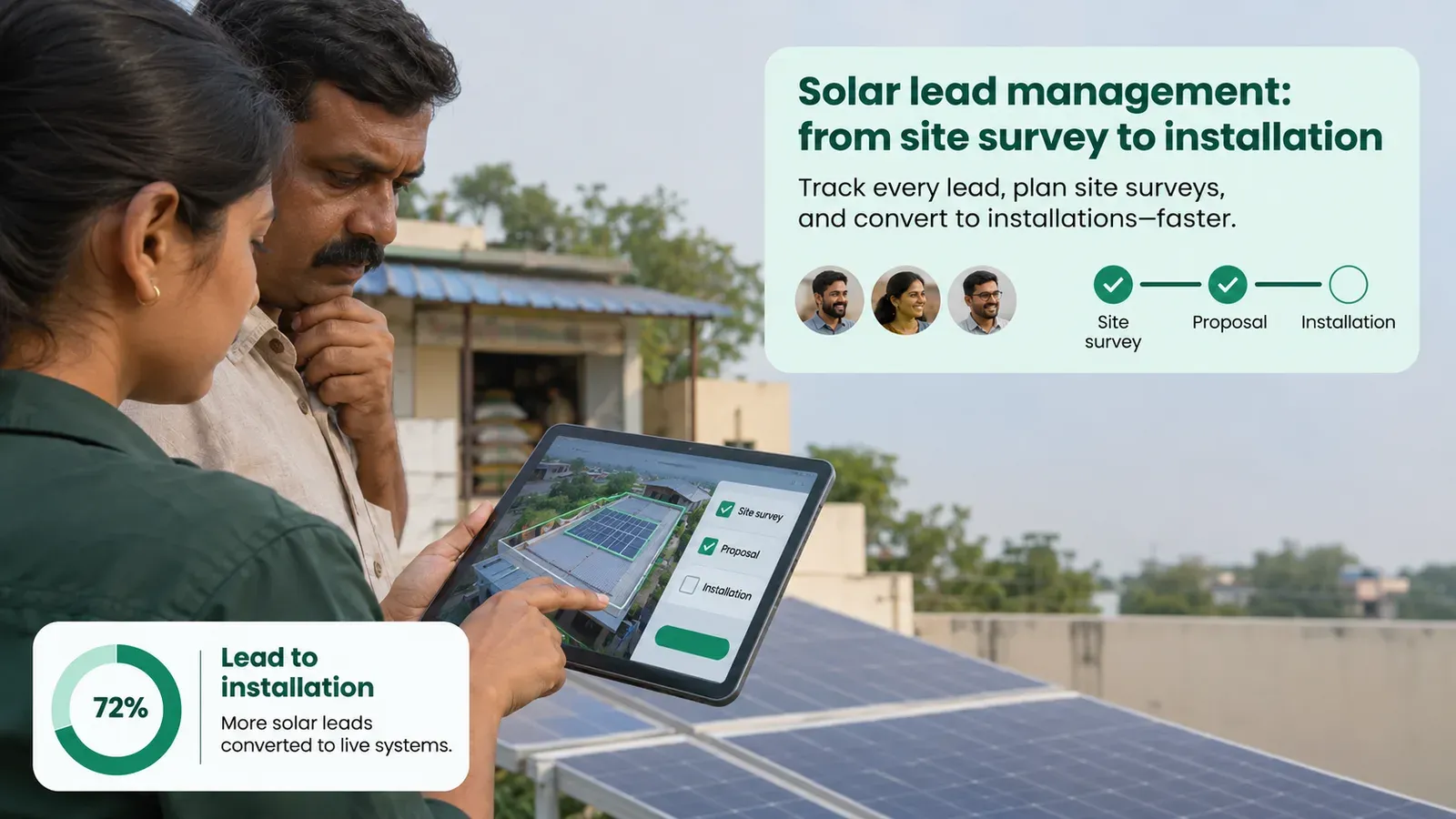
Solar lead management: from site survey to installation
Track every rooftop solar lead through seven stages, from enquiry and site survey to quote, PM Surya Ghar papers, installation and net metering.
- Checklist
- 2 tables
- 6 questions answered
-
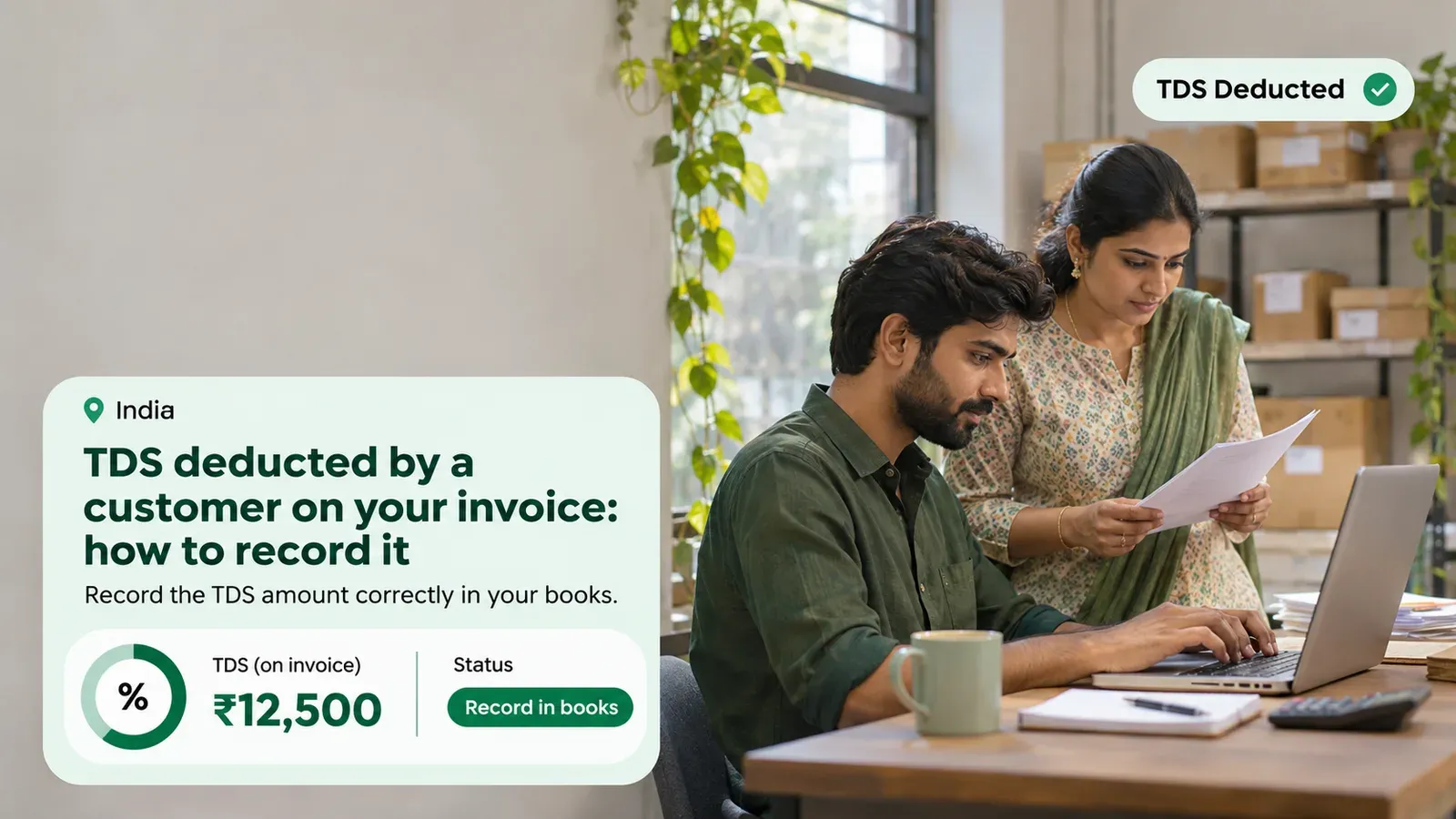
TDS deducted by a customer on your invoice: how to record it
When a customer deducts TDS, record the bank receipt and the TDS as two parts of one payment, then tick the TDS off against your annual tax statement.
- Checklist
- 3 tables
- 6 questions answered
-
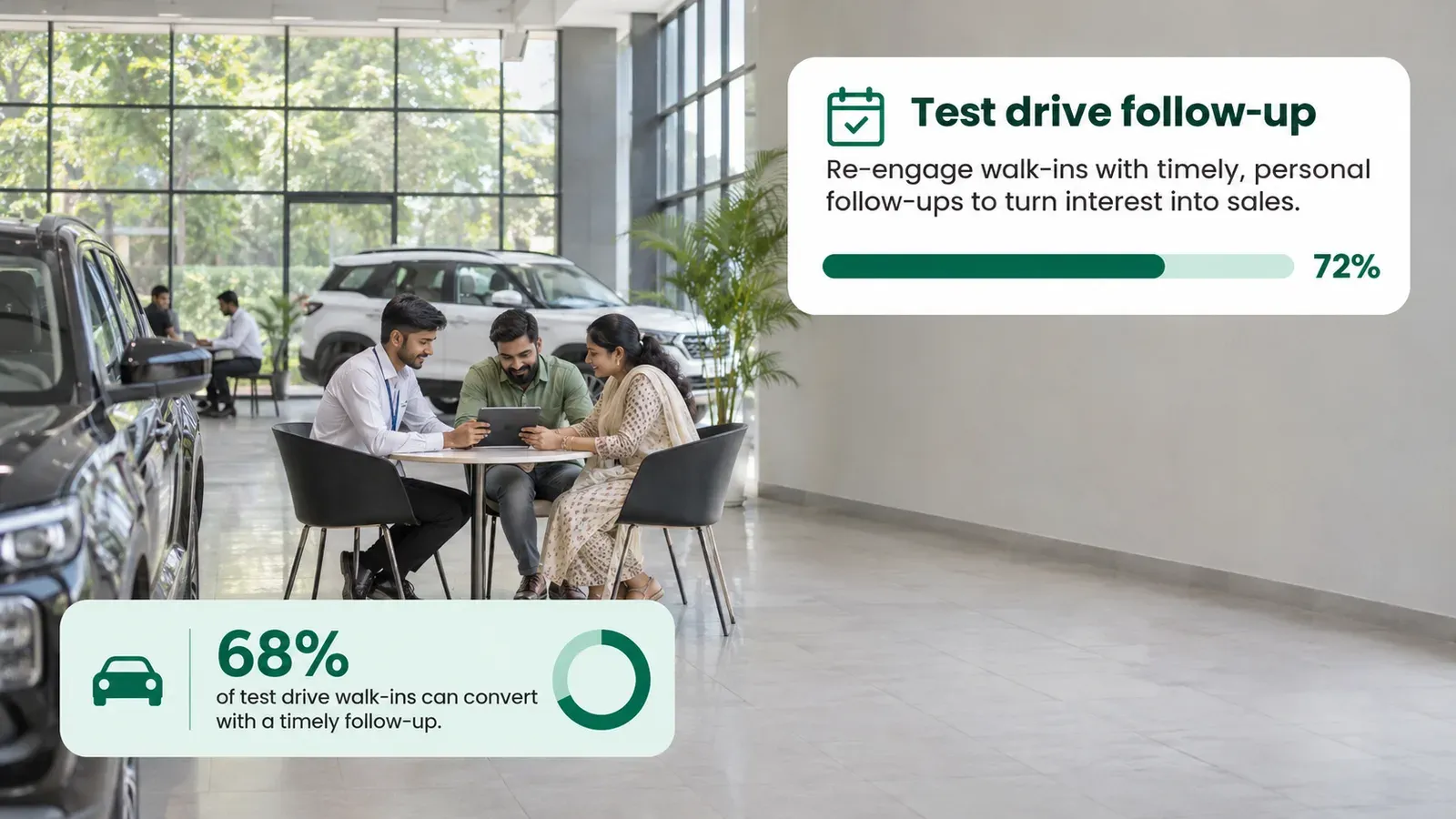
Test drive follow-up tips to turn walk-ins into sales
Call the same day, send a clear on-road price, sort the finance papers early and fix the next visit before the buyer leaves the showroom.
- Checklist
- 2 tables
- 5 questions answered
Recognized with numerous awards
Support, security, uptime and results, with the figures behind each badge.














FAQ
Frequently asked questions
Straight answers to what people ask most about iCRM.
Set up for your industry
Pick yours and its features come ready.
- Farm Businesses
- Automotive Dealers
- Consulting Firms
- Online Retail
- Education Institutes
- Energy Companies
- Financial Services
- Healthcare Clinics
- Hospitality Businesses
- Law Firms
- Logistics Companies
- Manufacturing Companies
- Media Agencies
- Nonprofit Organisations
- Real Estate
- Technology Companies
-
How soon should I follow up after a site visit?
Send a short thank-you message within the hour, while the buyer is still on the way home, and the full cost sheet within 24 hours. A call two days later picks up the questions the family has raised by then.
-
What should a cost sheet after a site visit include?
The unit number, carpet area under RERA, base price, floor rise, parking, other charges, GST, stamp duty and registration as estimates, the payment plan and how long the offer holds. Mark which figures are estimates.
-
How much booking amount can a builder take before the agreement?
Under Section 13 of RERA, a promoter cannot take more than 10 percent of the cost of the unit as an advance or application fee before a written agreement for sale is signed and registered. Check your state RERA rules too.
-
Is GST charged on a flat bought at the site visit stage?
GST applies to under-construction homes, at 1 percent for affordable housing and 5 percent for others, without input tax credit. Ready homes with a completion certificate carry no GST. Ask your tax adviser for each project.
-
Who deducts TDS on a property purchase?
The buyer. On a property worth ₹50 lakh or more, the buyer deducts 1 percent TDS and deposits it with Form 26QB. Remind buyers early, so the payment plan and the receipts match.
-
Why do buyers go quiet after a good site visit?
Usually because the family has not seen the unit, the numbers are not clear yet, or nobody followed up with a date. A planned second visit and a clear cost sheet answer most of it.
Get started with iCRM
Leads, quotes, work, invoices and payments in one app, set up for the way your industry works.
- 99% Uptime guarantee
- ISO ISO-aligned security
- 24/7 Response support
- GDPR GDPR compliant
- SSL SSL encrypted
-
16
Industries Each with its own features
-
47
Features Across those industries
-
11
Areas of work From leads to payments
-
3
Editions India, France and UAE