Industry insights
How manufacturers can manage dealer and distributor enquiries
Put every dealer and distributor enquiry from fairs, IndiaMART and calls in one list, qualify it with five questions and follow it to a first order.
Written by The iCRM team
Published 8 min read
- 1 list For every dealer enquiry
- 24 hours To reply to a new enquiry
- 5 questions To qualify a would-be dealer
- 45 days Longest MSME credit term in writing
On this page
- Key takeaways
- Where do dealer enquiries come from?
- Step 1: capture the enquiry the same day
- Step 2: qualify with five questions
- Step 3: check the business before you quote
- Step 4: move each enquiry through set stages
- Step 5: agree terms before the first order
- Handle visitor and dealer details with care
- Doing it in iCRM
- A distributor enquiry checklist
- Sources
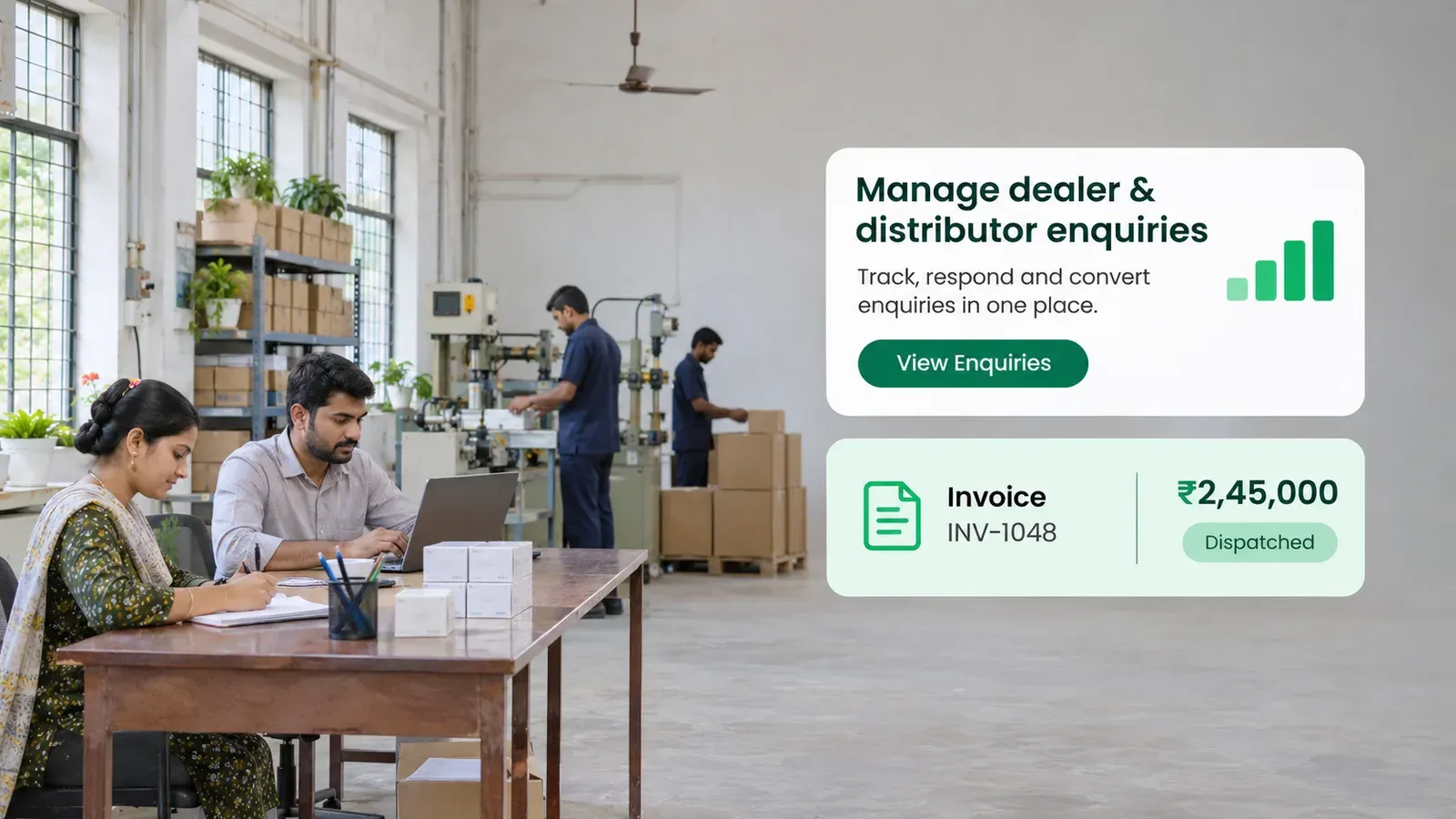
A manufacturer building a dealer network gets enquiries from everywhere: a trade fair stall, an IndiaMART lead, a call to the factory, a word from a sales rep. Most are lost because they sit in different places with nobody in charge. Put them all in one list, ask each would-be dealer the same five questions, and follow every serious one through set stages to a first order.
Key takeaways
- Keep every dealer and distributor enquiry in one list, whatever its source.
- Reply within a day, and give each enquiry an owner and a next date.
- Qualify with the same five questions, so you compare like with like.
- Check the GSTIN on the GST portal before you quote trade prices.
- Agree credit terms in writing before the first order goes out.
Where do dealer enquiries come from?
Enquiries reach a factory through many doors. Each one arrives in a different form and lands with a different person.
| Source | How it usually arrives | Who sees it first | The common risk |
|---|---|---|---|
| Trade fair | Visiting cards, a notebook, phone photos | The people on the stall | Left in a bag until the next fair |
| IndiaMART and other B2B portals | A lead on the portal, a call or a message | Whoever checks the portal | Answered late, or by two people |
| Calls to the factory | The landline or the owner’s mobile | Reception or the owner | Written on a slip of paper |
| Sales reps in the field | WhatsApp or a word at the office | One rep | Stays in that rep’s phone |
| Website or email | A form or an email | Accounts or admin | Not passed to sales |
The fix is the same for all of them. Whoever receives an enquiry enters it in one shared list on the same day, with the source written down. That way you also learn which source brings dealers who actually order.
Step 1: capture the enquiry the same day
Record the basics, nothing more. A long form at this stage means people skip it.
- The company name and the person’s name.
- Phone number and email.
- City, state and the area they want to cover.
- The products they asked about.
- The source: which fair, which portal, which rep.
- An owner and the date of the next step.
After a trade fair, set aside the first working day back for this. Enter every card, then send each visitor a short thank you with your catalogue and a time to call.
A first reply can be this simple:
A reply after a fair
Thank you for visiting our stall at the fair. I have attached our catalogue and dealer price list request form. May I call you on Thursday at 11 to understand your area?
Step 2: qualify with five questions
Not every enquiry is a dealer. Some are end users, some are competitors checking prices, some are traders looking for one lot. Ask every serious enquiry the same five questions, so your team can compare them fairly.
- Territory. Which districts or cities do you cover today?
- Products. Which of our products do you want to sell, and in what monthly quantity?
- Current business. What do you sell now, and for which brands?
- Payment. Will you pay in advance, against delivery or on credit?
- Registration. What is your GSTIN, and is it in the same state as your godown?
Score each answer as strong, fair or weak. An enquiry with a clear territory, a real monthly quantity and a working GSTIN goes forward. One that cannot answer the territory or quantity question is noted and closed politely.
Step 3: check the business before you quote
Before you share trade prices or offer credit, check that the business is what it says it is.
A GSTIN is a 15 character number. The first two digits are the state code and the next ten are the business’s PAN. You can search any GSTIN on the official GST portal without logging in. It shows the legal name, the trade name, the state and whether the registration is active, cancelled or suspended.
Match what the portal shows with the name on the visiting card, the letterhead and later the bank account. A mismatch is a question to ask, not always a reason to stop.
Getting the GSTIN right matters later too. Your tax invoice to a registered dealer carries their GSTIN, and goods moved above the set value need an e-way bill. A wrong number at the start becomes a wrong invoice at the first order.
Step 4: move each enquiry through set stages
Use the same stages for every would-be dealer, so anyone can see where each one stands.
| Stage | What happens | Typical next step |
|---|---|---|
| New enquiry | Entered with source and owner | First reply within a day |
| Qualified | Five questions answered, GSTIN checked | Share the dealer price list |
| Visit or meeting | Their shop, godown or your factory | Agree products and territory |
| Terms agreed | Prices, credit and targets in writing | Send the quote or proforma |
| First order | Order placed and invoiced | Plan the second order |
An enquiry that has not moved for two weeks needs a call. If there is still no reply after a few tries, send a short closing note and mark it lost, with the reason.
Step 5: agree terms before the first order
Write down what you agreed: products, territory, prices, discounts, targets and credit. It saves arguments later and keeps every dealer on the same footing.
If your business is a registered micro or small enterprise, credit terms carry legal weight. Under Section 15 of the MSMED Act 2006, a buyer must pay on the date agreed in writing, and that date cannot be more than 45 days after the goods are accepted. Where nothing is agreed in writing, the limit is 15 days. Since assessment year 2024-25, Section 43B(h) of the Income-tax Act also stops a buyer from claiming a deduction for such dues until they are paid, when paid late. How this applies depends on each case, so take advice from your chartered accountant.
Some dealers will deduct TDS when they pay you, under the Income-tax Act. Agree how this will show on your ledgers so payment follow-ups do not turn into disputes over small differences.
Handle visitor and dealer details with care
Visiting cards and enquiry forms carry personal data: a person’s name, number and email. The Digital Personal Data Protection Act 2023 asks businesses to tell people what data they collect and why, and to use it for that purpose. In practice, say on your enquiry form and at your stall that you will use the details to follow up the enquiry, keep the list in one controlled place, and let only the people who need it see it. Take legal advice on how the Act and its rules apply to your business.
Doing it in iCRM
These features are part of iCRM for manufacturers in India.
- Lead management. Every enquiry from fairs, portals, calls and reps goes into one list, with its source, its status and the person it is given to.
- Sales pipeline. Each would-be dealer moves from new enquiry to first order, and enquiries that have gone quiet are easy to spot.
- Task management and calendar. Give every enquiry a next step and a due date, and see calls and factory visits for the week.
- Customer management. Once a dealer is appointed, their details, GSTIN, history and open work stay together.
- Product catalog, estimates and quote builder. Keep dealer prices in one place and build an itemised quote from them.
- Tax management, invoicing and payment tracking. Apply the right tax rates, raise the invoice for the first order and see what is paid or overdue.
- Role-based permissions. Decide which staff can see dealer contacts and trade prices.
- Team messaging and document sharing. Share the catalogue, the price list and updates on each dealer without hunting through phones.
A distributor enquiry checklist
- Every enquiry is entered in one list on the day it arrives.
- Each enquiry has a source, an owner and a next date.
- Trade fair contacts get a reply within a day of the fair.
- Every serious enquiry is asked the same five questions.
- The GSTIN is checked on the GST portal before trade prices are shared.
- Each enquiry sits in one of five stages, from new enquiry to first order.
- Enquiries quiet for two weeks get a call.
- Products, territory, prices and credit are agreed in writing.
- People are told why their details are taken, and only the right staff can see them.
- Lost enquiries are closed politely, with the reason noted.
Sources
- The Digital Personal Data Protection Act, 2023 (India Code)
- Section 43B(h) of the Income Tax Act and the MSMED Act payment limit (ClearTax)
- Section 43B(h): MSME payment rule and the 45-day limit (Busy)
- GSTIN search and verification on the GST portal (Tally Solutions)
- What is a GSTIN and how it is structured (Bajaj Finserv)
Related articles
-
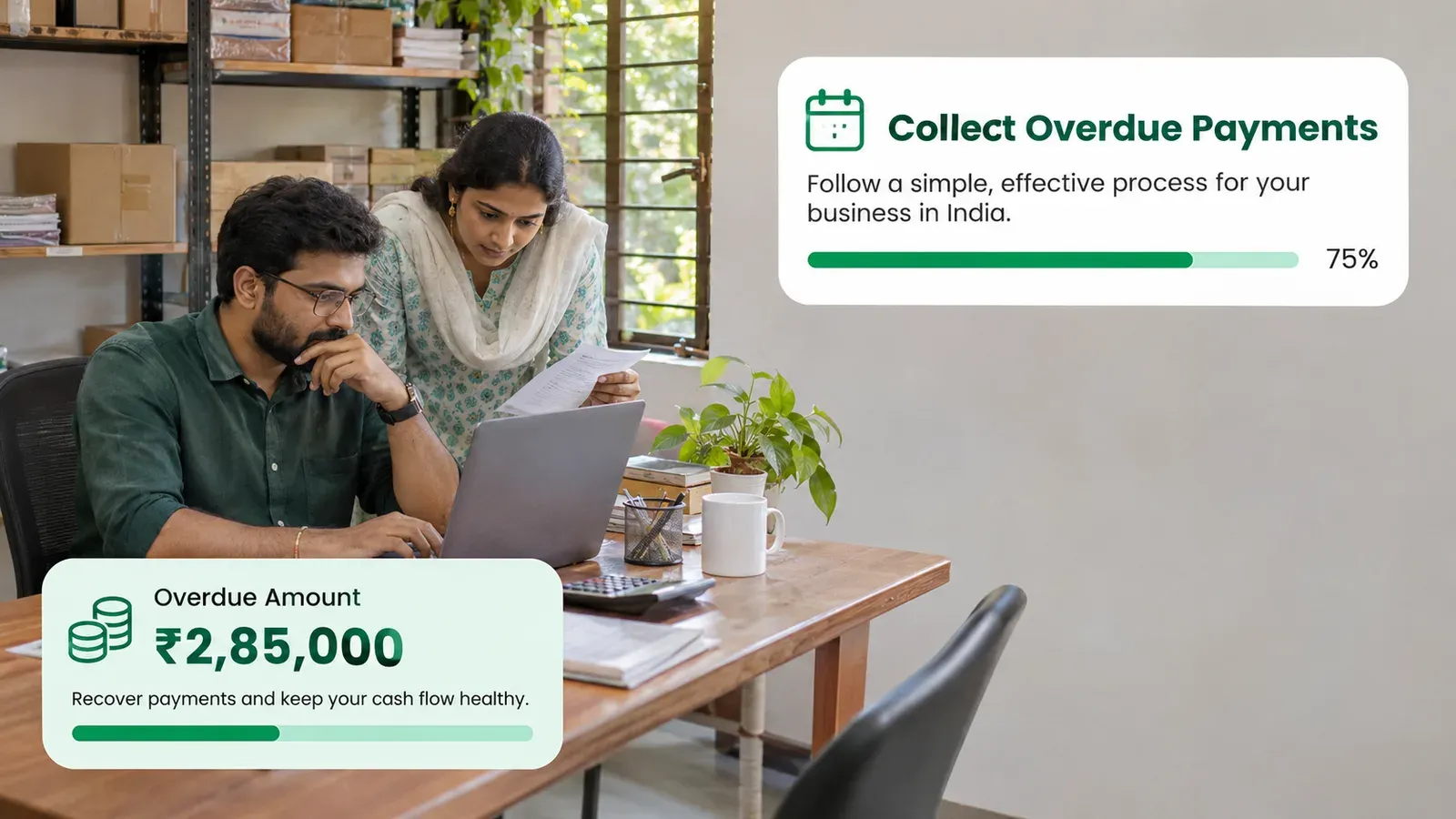
Part 2: How to collect overdue payments from clients in India
Remind before the due date, follow a polite schedule after it, send a final notice by day 45, then file on the MSME ODR portal if you are a micro or small unit.
- Checklist
- 2 tables
- 6 questions answered
-
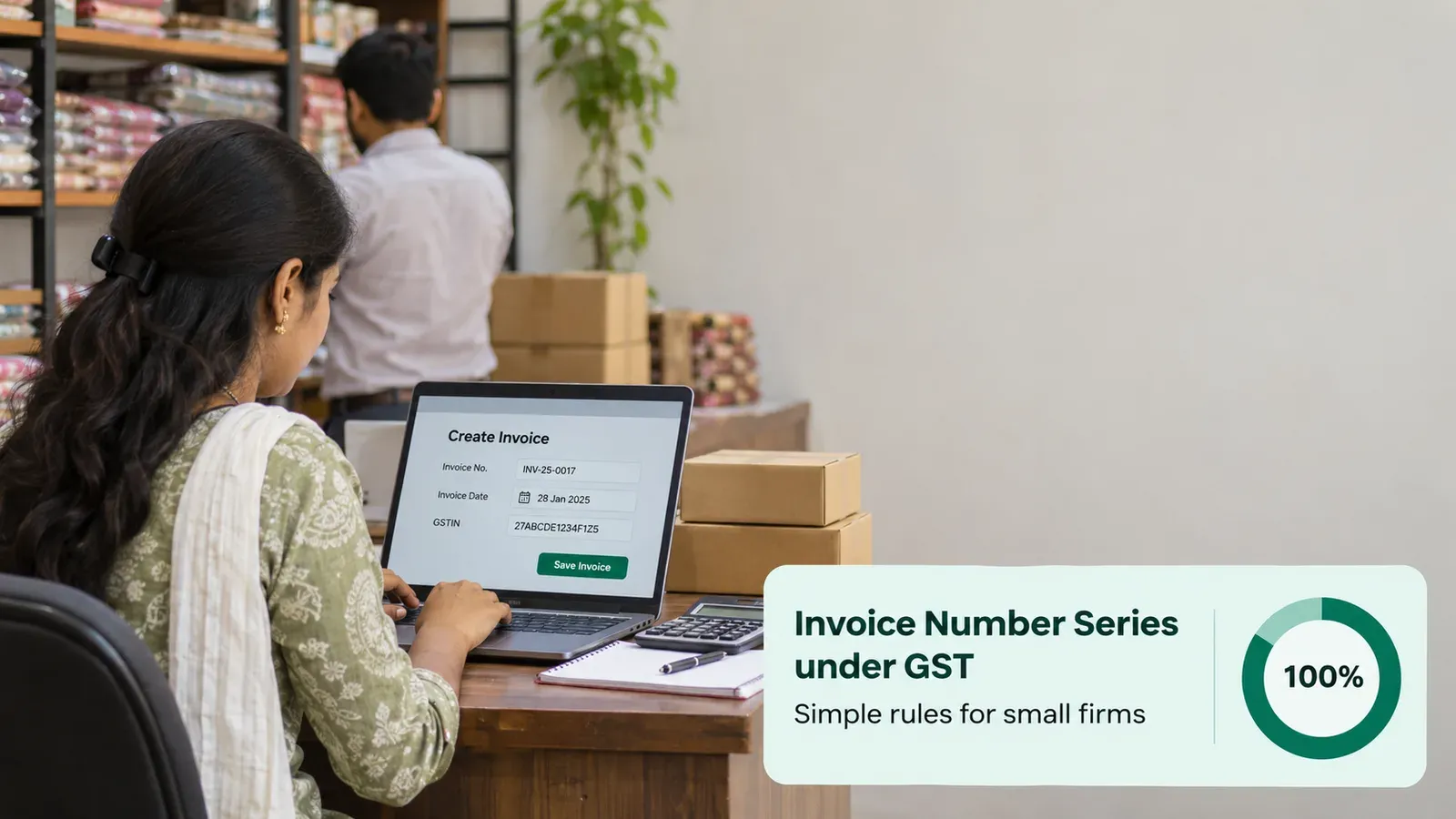
Part 3: Invoice number series rules under GST for small firms
Under GST an invoice number has up to 16 characters, runs in one or more series and is never repeated in a financial year. Start a fresh series each April.
- Checklist
- 2 tables
- 6 questions answered
-

Law firm case management in India: hearings, files and fees
Give every matter one file with its CNR, next hearing, papers, client updates and fee invoices, so a small practice stops running on diaries and memory.
- Checklist
- 2 tables
- 6 questions answered
Recognized with numerous awards
Support, security, uptime and results, with the figures behind each badge.














FAQ
Frequently asked questions
Straight answers to what people ask most about iCRM.
Set up for your industry
Pick yours and its features come ready.
- Farm Businesses
- Automotive Dealers
- Consulting Firms
- Online Retail
- Education Institutes
- Energy Companies
- Financial Services
- Healthcare Clinics
- Hospitality Businesses
- Law Firms
- Logistics Companies
- Manufacturing Companies
- Media Agencies
- Nonprofit Organisations
- Real Estate
- Technology Companies
-
How should a manufacturer manage distributor enquiries from different places?
Put every enquiry in one list, whatever its source, with the date, the source, an owner and a next step. Then qualify each one with the same questions and move it through the same stages to a first order.
-
What should I ask a would-be dealer or distributor?
Ask which territory they cover, which products they want, what they buy now and from whom, how they will pay, and whether they have a GSTIN. The answers tell you quickly whether to pursue the enquiry or close it politely.
-
How do I check that a distributor is a genuine business?
Search their GSTIN on the official GST portal, which needs no login. It shows the legal name, trade name, state and whether the registration is active. Match those details to the name on their letterhead and bank account.
-
How fast should I reply to a dealer enquiry from a trade fair?
Within a day of the fair, while they still remember your stall. A short message with your catalogue and a time to call works better than a long email a week later.
-
Do payment rules for MSMEs matter when I appoint distributors?
They can. If you are a registered micro or small enterprise, the MSMED Act caps agreed credit at 45 days, and buyers who pay late can lose a tax deduction. Put your credit terms in writing and take advice on your own case.
-
Can I keep trade fair visitor details without asking them?
Business card details are personal data of the person named. Tell people why you are taking their details and use them only for that purpose. The DPDP Act 2023 sets the rules; take legal advice on how they apply to you.
Get started with iCRM
Leads, quotes, work, invoices and payments in one app, set up for the way your industry works.
- 99% Uptime guarantee
- ISO ISO-aligned security
- 24/7 Response support
- GDPR GDPR compliant
- SSL SSL encrypted
-
16
Industries Each with its own features
-
47
Features Across those industries
-
11
Areas of work From leads to payments
-
3
Editions India, France and UAE