Industry insights
Law firm case management in India: hearings, files and fees
Give every matter one file with its CNR, next hearing, papers, client updates and fee invoices, so a small practice stops running on diaries and memory.
Written by The iCRM team
Published 8 min read
- 1 matter file For each brief, hearing and fee
- 16 digits In every eCourts CNR number
- 2 days Before a hearing to update the client
- 18 months Until most DPDP Rules duties apply
On this page
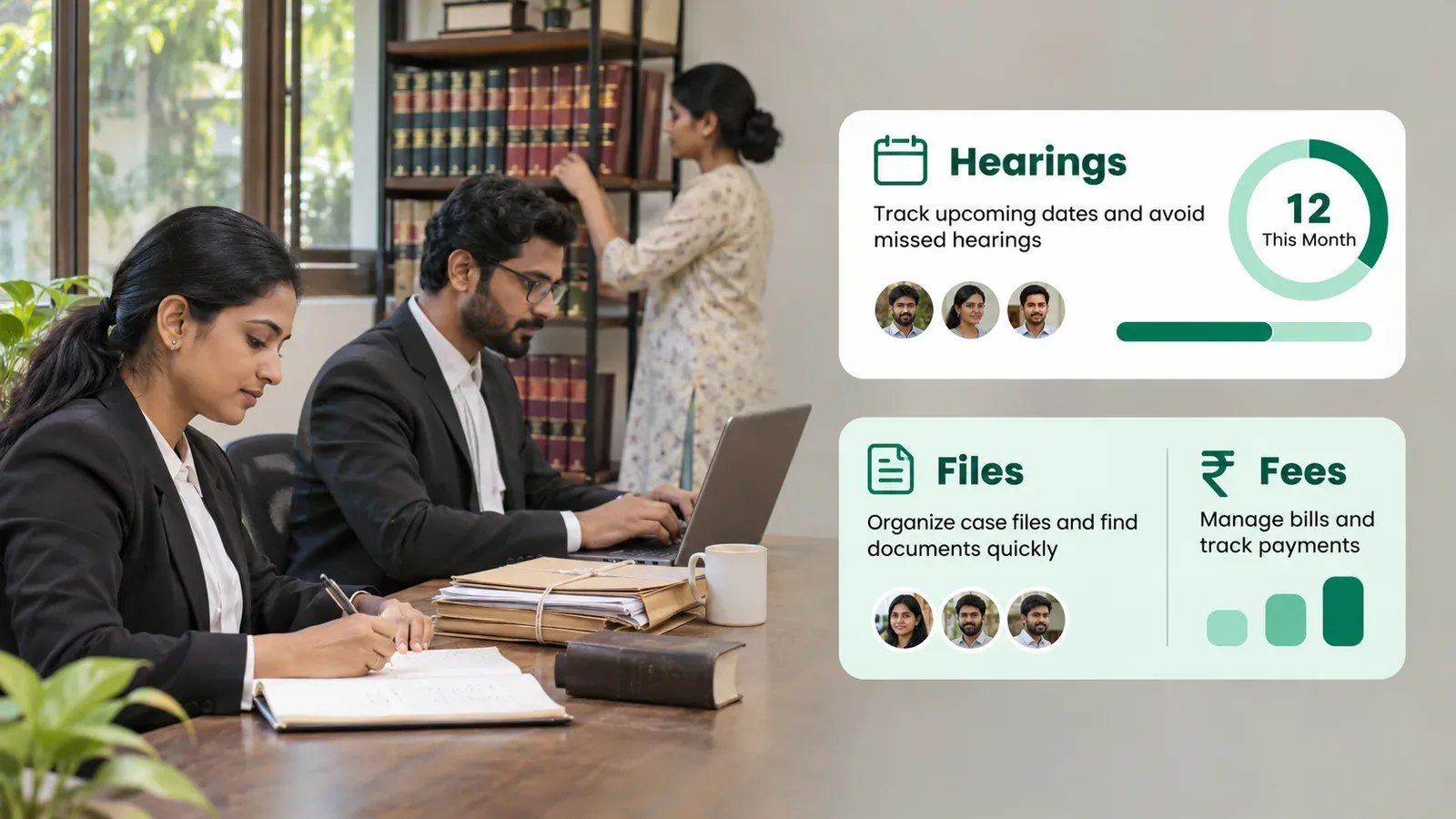
A small law practice can run its whole caseload from one file per matter: the court and CNR, the next hearing, the papers, a log of client updates and the fee invoices. When all of that sits together, a missed date or an unbilled appearance is easy to spot, and any junior in the chamber can pick up a file. The rules of the profession still apply, so the record serves clients you already have and enquiries that come to you, never outreach.
Key takeaways
- Open one matter file for every brief, keyed to the court’s CNR number.
- Copy the next date from the eCourts cause list into the file on the day it is given.
- Send the client a short update after every hearing and a reminder before the next.
- Raise fee invoices from the matter, with the GST treatment right for each client.
- Limit who can open each file, and keep the record in line with the DPDP Act.
Why diaries and paper files let matters slip
Most advocates still keep the board diary in a notebook and the brief in a cloth bundle. It works while one person holds every date in their head. It breaks the day that person is ill, travelling or in another court.
The usual losses are small and costly:
- A next date is noted in one diary but not in the chamber’s.
- A client calls to ask about the last hearing and nobody has the order to hand.
- An appearance is made, but the fee for it is never billed.
- A document the client sent on WhatsApp cannot be found a month later.
None of this needs a big system. It needs one agreed place for each matter, and the habit of updating it the same day.
What goes in a matter file
Treat the matter file as the single answer to “where does this case stand?” Keep the fields short and the same for every matter.
| Field | What to record | Where it comes from |
|---|---|---|
| Client and parties | Names, contact details, opposite party | The vakalatnama and the brief |
| Court and case number | Court, bench, case type and number, CNR | The filing and eCourts |
| Next date | Date, purpose (evidence, arguments, orders) | The day’s order or cause list |
| Papers | Pleadings, orders, evidence, client documents | Your filings and the client |
| Notes | What happened, what is pending, who acts | The advocate who appeared |
| Fees | Agreed fee, invoices raised, amounts received | Your fee note and receipts |
The CNR is a 16-digit number that eCourts gives each case. It is the most reliable key for the file, because the case number alone can repeat across courts and years.
Keeping hearing dates in one diary
Hearing dates are the backbone of a practice. Give the chamber one shared calendar and treat it as the master diary.
- After each hearing, the advocate who appeared enters the next date and purpose in the matter file that day.
- Each evening, a junior checks the eCourts cause list for the next day against the calendar.
- Each matter has a named advocate, so it is clear who appears and who prepares.
- Clashes between two courts show up early, while there is still time to arrange cover.
The official eCourts Services website and app let you search by CNR, see case status and view cause lists for High Courts and district courts. Use them to check, and keep your own diary as the record the chamber works from.
Client updates within the Bar Council’s rules
Rule 36 of the Bar Council of India Rules forbids advocates from advertising or soliciting work, directly or indirectly. A later proviso allows a website with only the particulars the Bar Council approves, such as name, contact details, enrolment and areas of practice.
That rule shapes how a practice uses a client record:
- Do keep a log of enquiries that people bring to you, and reply to them.
- Do keep existing clients informed about their own matters.
- Do not send promotional messages, offers or bulk campaigns to win work.
- Do not share one client’s matter, result or name to attract another.
A simple update rhythm keeps clients calm and cuts down calls to the chamber.
| When | What to tell the client | How |
|---|---|---|
| Same day as the hearing | What happened and the next date | A short message |
| Two days before the next date | Whether they must attend, what to bring | A message or call |
| When an order is uploaded | A copy of the order and what it means | Shared through the file |
| When a fee falls due | The invoice and how to pay | Sent from the matter |
Client communications are confidential. Keep them inside the matter, not in personal phones and group chats, so they stay private and can be found later.
Fee invoices, GST and TDS
Bill from the matter, so each appearance or piece of drafting is tied to the case it belongs to. That makes it easy to see work done but not yet billed.
GST on legal services needs care. The CBIC clarified in July 2017 that when an individual advocate or a firm of advocates gives legal services to a business entity, GST is paid by the business entity under reverse charge. Services to other clients may be treated differently, so confirm each client’s position with your chartered accountant and set the tax on each invoice to match.
Business clients may also deduct TDS from professional fees before paying you. Record the amount actually received against the invoice, and note the TDS deducted, so the client’s ledger and your own agree at year end.
Client data and the DPDP Act
A law practice holds some of the most private information people share: disputes, family matters, money and health. The Digital Personal Data Protection Act, 2023 sets duties for anyone who handles personal data in digital form. The government notified the DPDP Rules in November 2025, and most of their core duties, such as notice, consent, security safeguards and breach reporting, apply from May 2027.
Practical steps for a small chamber now:
- Give each person access only to the matters they work on.
- Remove access the day a junior or clerk leaves.
- Keep client papers in the matter file, not scattered across phones and email.
- Know what you hold for each client, so you can answer if they ask.
These steps are good practice. For your exact duties under the Act, take advice specific to your practice.
Doing it in iCRM
These features are part of iCRM for legal practices in India:
- Customer management. Each client in one place, with their details, history and open matters.
- Lead management. A list of enquiries that come to you, each with an owner and a next step.
- Calendar and task management. Hearing dates, deadlines and who does what, with today’s list in view.
- File management and document sharing. Pleadings, orders and client papers stored with the matter they belong to.
- Client messaging and the customer portal. Updates sent from the matter, and a place where clients see what you share with them.
- Private notes. Notes on a matter that only your team can see.
- Proposals and e-signatures. Fee proposals set out and signed on screen.
- Invoicing, tax management and payment tracking. Invoices raised from the matter with the right tax, and a clear view of what is paid or due.
- Document expiry tracking. A reminder before a certificate, registration or other dated document runs out.
- Record-level permissions and account security. Each matter limited to the people on it, and access removed when someone leaves.
A law firm case management checklist
- Every brief has a matter file with its CNR.
- Every next date goes into the shared calendar the same day.
- The next day’s cause list is checked each evening.
- Every matter has a named advocate.
- The client gets an update after each hearing and before the next.
- No promotional messages go out from the client list.
- Every appearance is billed from its matter.
- Each invoice carries the right GST treatment for that client.
- Access to each file is limited to the people working on it.
Sources
- Bar Council of India Rules, Part VI (rules on professional standards, including Rule 36)
- CBIC press release, 15 July 2017: Legal services by advocates including senior advocates
- eCourts Services: case status, cause lists and the CNR search
- Vikaspedia: how to check court case status online in India
- The Digital Personal Data Protection Act, 2023 (MeitY)
- AZB and Partners: India’s DPDP framework comes into effect, November 2025
Related articles
-
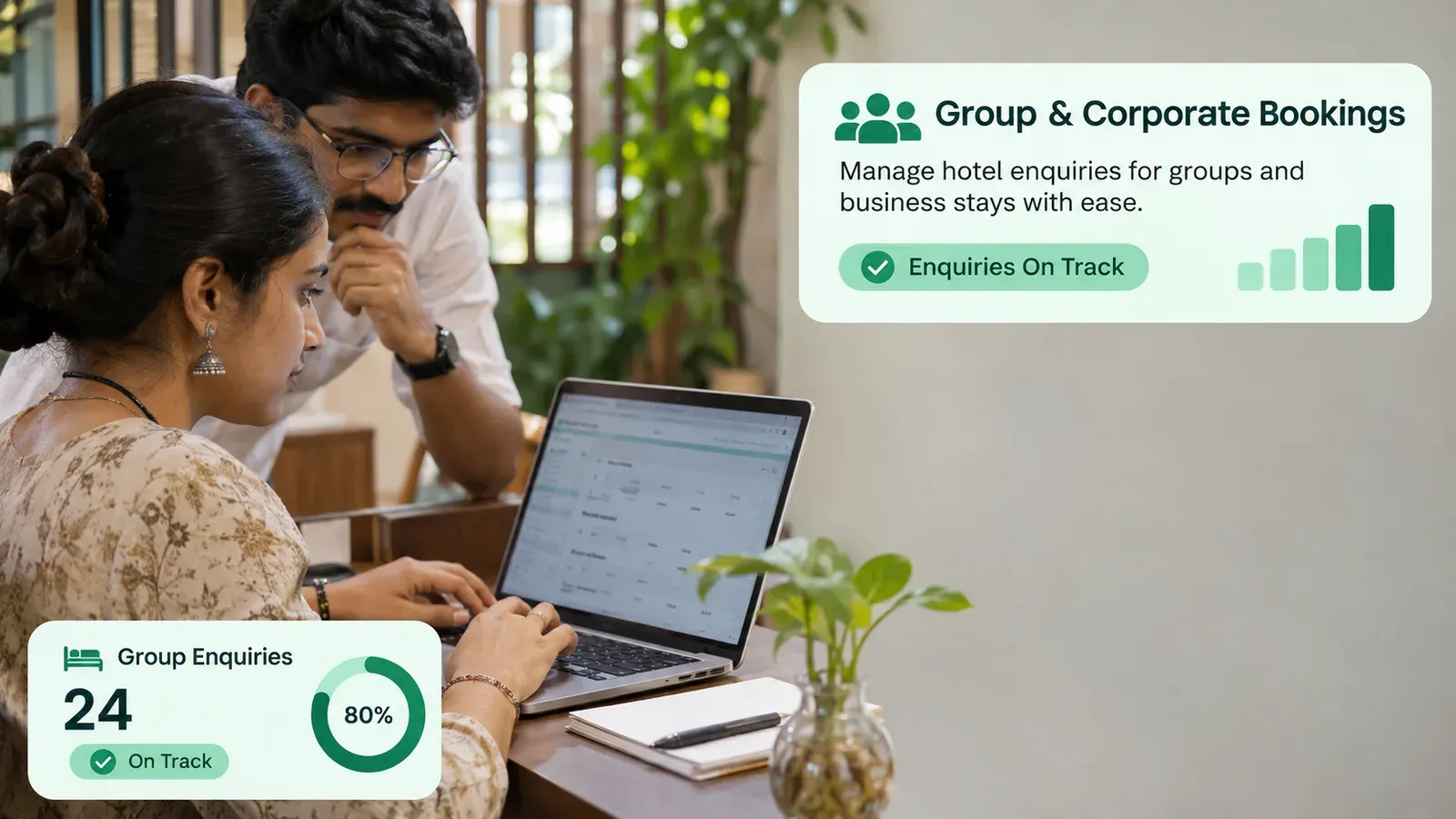
Managing hotel group and corporate booking enquiries
Handle hotel group booking enquiries in one place, from first call to quote, advance and final bill, with the right GST rate on rooms, food and banquets.
- Checklist
- 1 table
- 5 questions answered
-

Patient follow-up reminders for clinics: quick tips
Book the next visit before the patient leaves, remind them twice, say a report is ready without the result, and keep health details private under the DPDP Act.
- Checklist
- 1 table
- 5 questions answered
-

Quick tips to follow up WhatsApp leads before they go cold
Log every WhatsApp enquiry as a lead the same day, reply within the hour, set a next follow-up date and sort chats with labels so none is lost.
- Checklist
- 3 tables
- 5 questions answered
Recognized with numerous awards
Support, security, uptime and results, with the figures behind each badge.
















FAQ
Frequently asked questions
Straight answers to what people ask most about iCRM.
Set up for your industry
Pick yours and its features come ready.
- Farm Businesses
- Automotive Dealers
- Consulting Firms
- Online Retail
- Education Institutes
- Energy Companies
- Financial Services
- Healthcare Clinics
- Hospitality Businesses
- Law Firms
- Logistics Companies
- Manufacturing Companies
- Media Agencies
- Nonprofit Organisations
- Real Estate
- Technology Companies
-
What is case management for a law firm in India?
It is one record for each matter that holds the parties, the court and CNR, the hearing dates, the papers, the notes, the client updates and the fee invoices, so anyone in the chamber can see where the matter stands.
-
Can an advocate use a CRM without breaking the Bar Council's rules?
Yes, for running the practice. Rule 36 of the Bar Council of India Rules forbids advertising and soliciting work, so use the CRM to manage enquiries that come to you and to keep existing clients informed, never for promotional outreach.
-
Who pays GST on an advocate's fees?
When an individual advocate or a firm of advocates gives legal services to a business entity, the business entity pays the GST under reverse charge, as the CBIC clarified in July 2017. Check your own position with your chartered accountant.
-
Where do I get hearing dates and case status?
From the official eCourts Services website and app, which let you search by CNR and see cause lists for High Courts and district courts. Copy each next date into the matter file the same day.
-
Does the DPDP Act apply to a small law practice?
A practice that holds clients' personal data in digital form will generally have duties under the Digital Personal Data Protection Act, 2023. Most duties under the 2025 Rules apply from May 2027, so it is sensible to tidy access and records now.
-
How often should I update a client about their matter?
A good habit is a short note after every hearing with the outcome and the next date, and a reminder a couple of days before the next one, with anything you need from them.
Get started with iCRM
Leads, quotes, work, invoices and payments in one app, set up for the way your industry works.
- 99% Uptime guarantee
- ISO ISO-aligned security
- 24/7 Response support
- GDPR GDPR compliant
- SSL SSL encrypted
-
16
Industries Each with its own features
-
47
Features Across those industries
-
11
Areas of work From leads to payments
-
3
Editions India, France and UAE