Industry insights
CRM for small business in the UAE: what to look for
A CRM for small business in the UAE should keep leads and customers in one place, put VAT on AED invoices, work on a phone and hold customer data responsibly.
Written by The iCRM team
Published 8 min read
- 5% VAT Standard rate on most UAE sales
- 375,000 dirhams Taxable sales that make VAT mandatory
- 14 days To issue a tax invoice after a sale
- 7 questions To ask before you choose a CRM
On this page
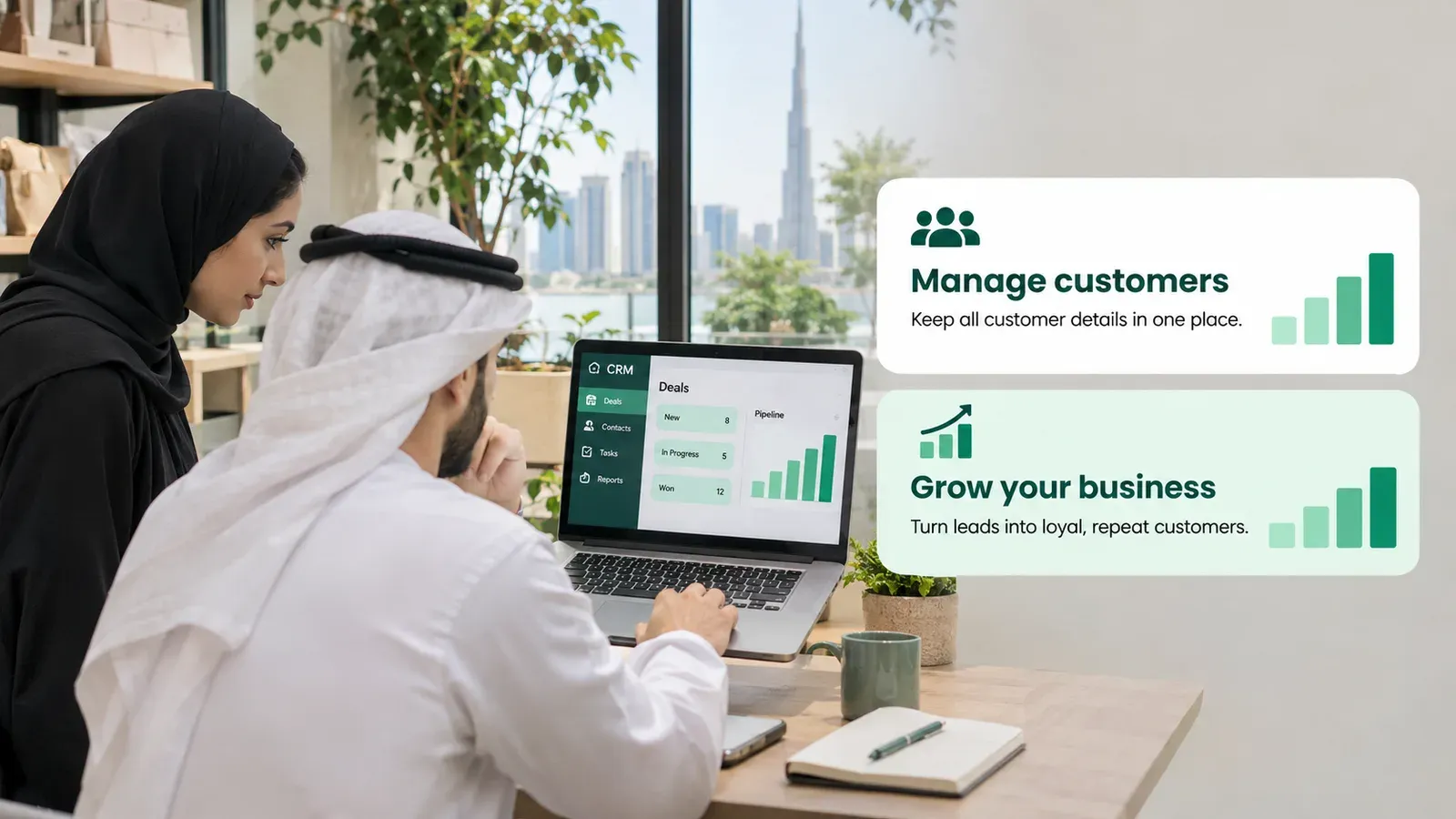
A CRM for small business in the UAE should do four things well: keep every lead and customer in one list, turn work into quotes and invoices with VAT in AED, work on a phone as well as a computer, and hold customer data responsibly. If a system does those four things and your team will actually use it, it is worth a trial. Everything else is a bonus.
This guide is for owners who run the business today on WhatsApp chats, a spreadsheet and memory, and want to know what to look for before they move.
Key takeaways
- Start from your own jobs: enquiries, follow-ups, quotes, invoices and payments.
- If you are registered for VAT, the CRM should put the right tax details on every invoice.
- Your team works on the move, so the phone app matters as much as the desktop.
- Customer details are personal data under the UAE PDPL. Know who can see them.
- Compare options with the same short list of questions, and test with real work.
Why move off WhatsApp and spreadsheets?
WhatsApp is how many UAE customers like to talk, and that will not change. The trouble starts when the chat is the only record. An enquiry sits in one salesperson’s phone. A quote is a photo of a spreadsheet. Nobody else can see what was promised or when to call back.
A spreadsheet helps for a while, but it does not remind anyone. It does not show who changed a price. It is easy to copy, email and lose.
A CRM keeps the chat where customers like it, and moves the work into one shared place: who asked, what they need, who owns it and what happens next.
| Task | WhatsApp and spreadsheet | A CRM |
|---|---|---|
| New enquiry | Sits in one person’s chat | Logged as a lead with an owner |
| Follow-up | Relies on memory | Has a date and a reminder |
| Quote | Typed again each time | Built from your services and prices |
| Invoice | Made in a separate tool | Made from the same customer record |
| Payment | Checked against the bank by hand | Marked paid, part paid or due |
| Staff leaves | The history leaves with them | The history stays with the customer |
What should it do for VAT and AED invoices?
The standard VAT rate in the UAE is 5%. A business must register with the Federal Tax Authority (FTA) once its taxable supplies and imports pass AED 375,000 over the last 12 months, or are expected to in the next 30 days. Voluntary registration is possible from AED 187,500.
Once you are registered, your invoices carry rules. A full tax invoice shows the words Tax Invoice, your name, address and Tax Registration Number (TRN), the customer’s details, the date, a description of what you supplied, and the VAT charged. The FTA expects the VAT amount to be shown in AED, even if you bill in another currency. A tax invoice is generally issued within 14 days of the supply.
Look for a CRM that:
- lets you set your tax once and applies it to every quote and invoice;
- keeps each invoice with the customer it belongs to;
- can bill a customer in another currency when you need to, while you keep your AED figures clear;
- shows which invoices are paid, part paid or overdue.
E-invoicing is also coming. Under Ministry of Finance decisions, a business with revenue below AED 50 million must appoint an accredited service provider by 31 March 2027 and use the e-invoicing system by 1 July 2027, where it applies to them. A CRM will not do this for you on its own, but clean customer records and consistent invoices make the move much easier. Ask your accountant which dates apply to your business.
Will your team use it on the move?
Most UAE small businesses do their work away from the desk: on site visits, in client offices, between Dubai, Sharjah and Abu Dhabi. If adding a lead or checking a job takes more than a minute on a phone, people will go back to the chat.
When you test a CRM, ask the people who will use it every day to try the phone app with a real enquiry. Can they log it, set a follow-up date and find the customer again the next morning?
English and Arabic-speaking teams
Many UAE teams work across languages. Customers may write in Arabic, staff may speak English, Hindi, Urdu or Tagalog, and the owner needs one view of it all. Ask each provider plainly which languages the screens, quotes and invoices support today, and test it with your own documents. Do not rely on a promise of a feature that is “coming soon”.
How should it hold customer data?
Customer names, phone numbers and emails are personal data. In mainland UAE and most free zones, Federal Decree-Law No. 45 of 2021 on the protection of personal data (the PDPL) covers data processed by electronic means. The DIFC and ADGM have their own data protection laws.
In practice, that means a few habits a CRM should support:
- Collect what you need. Keep the details you use to serve the customer, and no more.
- Limit who sees what. Staff should see the customers they work with.
- Keep it in one place. Fewer copies in phones, spreadsheets and emails means fewer leaks.
- Answer requests. If a customer asks what you hold, or asks you to correct it, you can find it quickly.
Ask each provider where your data is stored, how it is protected and how you can export it if you leave. Keep legal questions for your adviser. This guide is general and not legal advice.
How do you compare the options?
Write your own list of jobs before you look at any product. Then ask every provider the same seven questions.
- Can we log a lead, give it an owner and set the next date in under a minute?
- Does it build quotes and invoices with our VAT and our TRN on them?
- Can it bill in AED, and in another currency when a customer needs it?
- How well does the phone app work for the people on the road?
- Which languages do the screens and documents support today?
- Where is our data held, who can see it, and how do we export it?
- What does each plan cost per month, and what is included?
Then run a short trial with real work: ten real enquiries, a real quote and a real invoice. The one your team keeps using after the first week is usually the right one.
Doing it in iCRM
These are the parts of iCRM that UAE small businesses in every trade use. The features each trade sees differ a little by industry.
- Lead management. Every enquiry in one list, with who asked, what they need and what happens next.
- Customer management. Each customer’s details, history and open work on one record.
- Task management and the calendar. Every follow-up and visit has an owner and a date, and the week is planned in one view.
- Automated reminders. Follow-ups and due dates come up on time, without anyone setting an alarm.
- Tax management and invoicing. Set the taxes you charge once, and apply them to quotes and invoices made from the customer’s record.
- Multi-currency billing. Quote and invoice a customer in their own currency where your industry has it.
- Payment tracking. See which invoices are paid, part paid or still due, and who to chase.
- Team messaging and document sharing. Updates and files stay with the job, not scattered across chats.
iCRM runs on web, mobile and desktop, so the team on the road and the office work from the same records.
A CRM for small business checklist
- A written list of the jobs the CRM must do.
- Your VAT status checked against the AED 375,000 and AED 187,500 lines.
- Your tax and TRN set up on quotes and invoices.
- Every lead with an owner and a next date.
- The phone app tested by the people who will use it.
- Languages checked with your own documents.
- Where data is held, and who can see it, agreed.
- An export of your data tested before you commit.
- Your e-invoicing dates confirmed with your accountant.
- A one-week trial run with real enquiries and invoices.
Sources
- UAE government portal: value added tax
- Federal Tax Authority: VAT tax invoices guides
- Federal Tax Authority: public clarification VATP006 on tax invoices
- Ministry of Finance: UAE e-invoicing programme
- Ministerial Decision 244 of 2025 on the implementation of the e-invoicing system
- UAE government portal: data protection laws
- UAE legislation portal: Federal Decree-Law No. 45 of 2021 on the protection of personal data
Related articles
-

Event budget tracking: best practices for UAE planners
Lock the approved budget, record every supplier cost against its line as it is committed, and review the gap at set checkpoints until the final invoice.
- Checklist
- 3 tables
- 5 questions answered
-
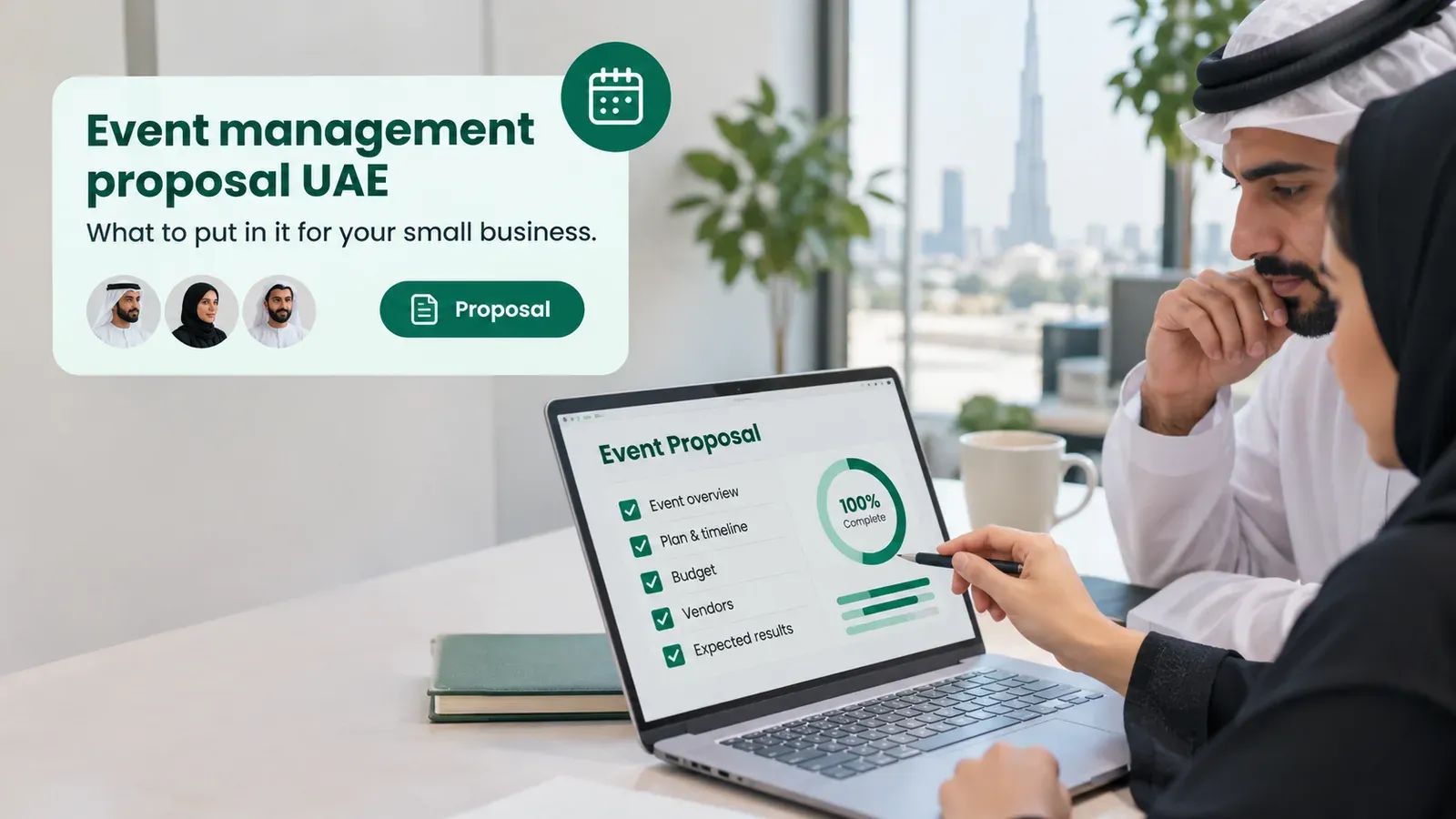
Event management proposal UAE: what to put in it
A UAE event management proposal sets out the concept, venue, suppliers, timeline, costs in AED with 5% VAT and payment stages, then gets signed online.
- Checklist
- 4 tables
- 6 questions answered
-
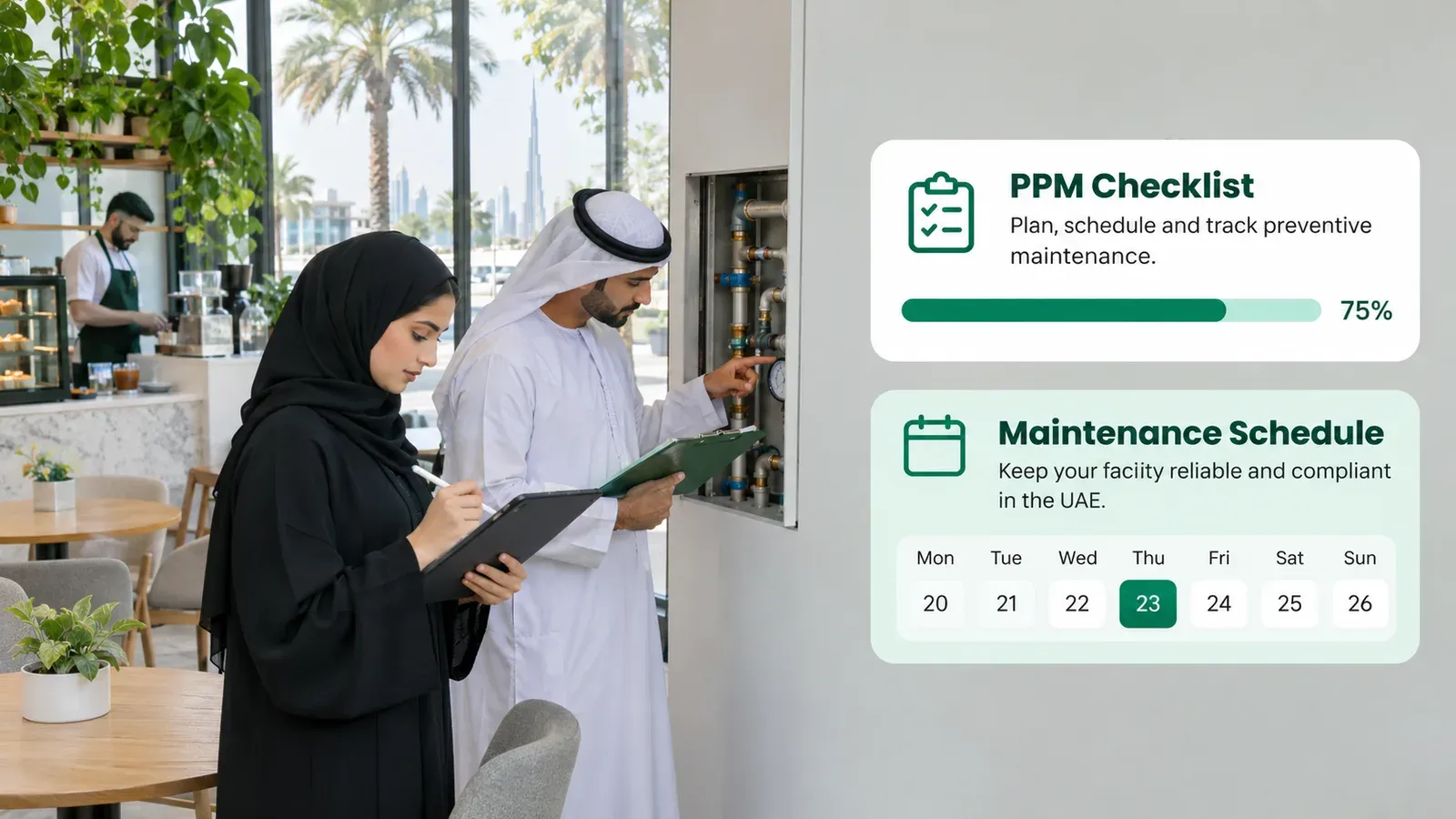
Facility management PPM checklist: build one that works
List every asset, write a short checklist for each type, set its frequency and give each visit an owner, a date and a record that the client can see.
- Checklist
- 2 tables
- 6 questions answered
Recognized with numerous awards
Support, security, uptime and results, with the figures behind each badge.



FAQ
Frequently asked questions
Straight answers to what people ask most about iCRM.
Set up for your industry
Pick yours and its features come ready.
- Automotive Dealers
- Beauty Salons
- Construction Companies
- Consulting Firms
- Online Retail
- Event Management
- Facility Management
- Healthcare Clinics
- Hospitality Businesses
- Logistics Companies
- Real Estate
- Travel Agencies
-
What should a CRM for small business in the UAE do?
Keep every enquiry and customer in one list, give each one an owner and a next date, turn work into quotes and invoices with VAT in AED, track payments, and work on a phone as well as a computer.
-
Does a UAE small business need a CRM that handles VAT?
If you are registered for VAT, your tax invoices must show set details such as your TRN and the VAT charged. A CRM that builds invoices with the tax on them saves you copying figures into another tool and making mistakes.
-
When must a UAE business register for VAT?
Registration is mandatory once taxable supplies and imports pass AED 375,000 over the last 12 months, or are expected to in the next 30 days. Voluntary registration is possible from AED 187,500. Check the FTA's current guidance for your case.
-
Is customer data in a CRM covered by UAE data protection law?
In most cases, yes. Federal Decree-Law No. 45 of 2021 covers personal data processed by electronic means. Businesses in the DIFC and ADGM follow their own free zone data laws instead.
-
Can my team still use WhatsApp if we move to a CRM?
Yes. Customers will keep messaging you. The change is that each enquiry, its owner and its next step are written on the customer's record, so the work does not live only in one person's phone.
-
How do I compare CRM options for a small business?
Write down the jobs you need done, then ask each provider the same questions about VAT invoices, AED, mobile use, languages, where data is held, how you export it and what each plan costs per month.
Get started with iCRM
Leads, quotes, work, invoices and payments in one app, set up for the way your industry works.
- 99% Uptime guarantee
- ISO ISO-aligned security
- 24/7 Response support
- GDPR GDPR compliant
- SSL SSL encrypted
-
12
Industries Each with its own features
-
45
Features Across those industries
-
11
Areas of work From leads to payments
-
3
Editions India, France and UAE