Industry insights
UAE PDPL compliance for small business customer data
UAE PDPL compliance for small business means a clear reason and consent for each record, quick answers to access and correction requests, and limited access.
Written by The iCRM team
Published 7 min read
- 6 rights Customers hold under the PDPL
- 1 list Of every place customer data is kept
- 1 owner For every data request
On this page

The UAE Personal Data Protection Law, Federal Decree-Law No. 45 of 2021, asks a small business to do four plain things with customer details: have a lawful reason to hold them, keep them secure, answer the customer’s requests, and limit who can see them. If your leads and clients sit in spreadsheets, staff phones and a CRM, the hardest part is knowing where everything is. This guide sets out a simple way to get there.
Key takeaways
- The PDPL covers customer details held on computers, phones and online tools, whether the processing happens inside or outside the UAE.
- Hold each record for a clear reason, and get clear consent before you market to anyone.
- Customers can ask to see, copy, correct, erase or restrict their data, and can object to direct marketing.
- Give staff access only to the customers their work needs.
- Report a serious breach to the UAE Data Office straight away.
This is a general guide, not legal advice. For your own situation, speak to a qualified adviser.
Does the PDPL apply to your business?
The law came into force on 2 January 2022. It applies to personal data processed fully or partly through electronic systems. A customer’s name, mobile number, email, address, Emirates ID copy or WhatsApp chat history all count as personal data.
Some businesses follow other rules instead, or as well:
| Where you operate | Which rules apply |
|---|---|
| Mainland UAE and most free zones | The federal PDPL |
| DIFC | The DIFC data protection law |
| ADGM | The ADGM data protection regulations |
| Health providers | The PDPL plus the health data law, Federal Law No. 2 of 2019 |
| Banks and finance firms | The PDPL plus Central Bank rules on customer data |
The detailed executive regulations under the PDPL were still awaited for a long time after the law was issued. Check the UAE Data Office or the official legislation portal for the current position before you finalise your own process.
A lawful reason, and consent where you need it
The starting point of the law is that you should not process someone’s personal data without their consent. It then lists exceptions, such as carrying out a contract the customer is part of, meeting a legal duty, or protecting a public interest.
For a small business, this usually means:
- A customer who has hired you. You can keep the details you need to deliver the work, invoice them and keep the records the law asks you to keep, such as VAT tax invoices.
- A lead who asked for a quote. You can reply and follow up on that enquiry.
- Marketing messages. Ask first. Consent should be clear, specific and easy to withdraw, and you should be able to show when and how it was given.
Write down, in one line per type of record, why you hold it. “Leads: to answer their enquiry and send a quote” is enough.
Answering access and correction requests
The PDPL gives customers a set of rights, in Articles 13 to 18 of the law.
| Right | What the customer can ask |
|---|---|
| Access | What data you hold, why, who receives it and how long you keep it |
| Portability | A copy of their data in a usable form, where technically possible |
| Correction or erasure | Fix wrong details, or delete them in the cases the law lists |
| Restriction | Pause processing while accuracy or lawfulness is checked |
| Objection | Stop direct marketing and related profiling |
| Automated decisions | Object to a decision made only by a machine with serious effects |
A request can arrive by phone, email or WhatsApp. Treat each one the same way:
- Log the request, the date and who asked.
- Check that the person is who they say they are.
- Find every copy of their data: the CRM, spreadsheets, phones and email.
- Do what they asked, or explain clearly why the law lets you keep something, such as an invoice you must retain.
- Reply in writing and note the date you closed it.
Name one person in the business to own these requests. When everyone is responsible, nobody answers.
Who can see what
The law asks businesses that hold personal data to keep it secure, confidential and private. For a small team, the biggest risk is usually not hackers. It is customer lists copied to personal phones, shared spreadsheets sent to the wrong person, and former staff who still have access.
Simple rules that help
- Keep customer data in one system, not in personal phones and private sheets.
- Give each person access to the customers their work needs, and no more.
- Remove access on the day someone leaves.
- Do not send full customer lists by email or chat.
- Keep copies of identity documents only when you truly need them.
| Role | Should see |
|---|---|
| Owner or manager | All customers and all records |
| Sales staff | Their own leads and customers |
| Site or service staff | The jobs and contact details they work on |
| Accounts | Invoices, payments and billing details |
When something goes wrong
Article 9 of the PDPL asks the business to report a breach that harms the privacy, confidentiality or security of personal data to the UAE Data Office as soon as it becomes aware of it, with the results of its investigation. A lost phone with customer chats, a spreadsheet emailed to the wrong person or a hacked account can all count.
Keep a short plan: who decides, how to contain the problem, how to record it, and when to tell customers. Separate laws, such as the federal cybercrime law, also deal with unlawful collection or disclosure of personal data.
Doing it in iCRM
- Customer management. Every customer in one place, with their details, history and open work, so you can find all of a person’s data when they ask.
- Lead management. Every enquiry in one list with its owner, instead of scattered across phones and spreadsheets.
- Staff management. Add staff and their roles, see who works on what, and keep the team list up to date when people join or leave.
- Task management. Turn each access, correction or erasure request into a task with an owner and a due date.
- Document sharing. Share files with the right people from one place, rather than sending customer documents around by email.
- Invoicing and tax management. Keep invoices and the VAT on them with the customer they belong to, so you know which records you must keep.
A PDPL compliance checklist
- List every place customer data is kept: CRM, sheets, phones, email.
- Write one line on why you hold each type of record.
- Record when and how each customer agreed to marketing.
- Name one person to own data requests.
- Log every request, with the date it came in and the date it closed.
- Give staff access only to the customers their work needs.
- Remove access on the day someone leaves.
- Keep a short plan for a lost phone or leaked file.
- Check whether you are under the DIFC or ADGM rules instead.
- Check the latest guidance from the UAE Data Office.
Sources
Related articles
-
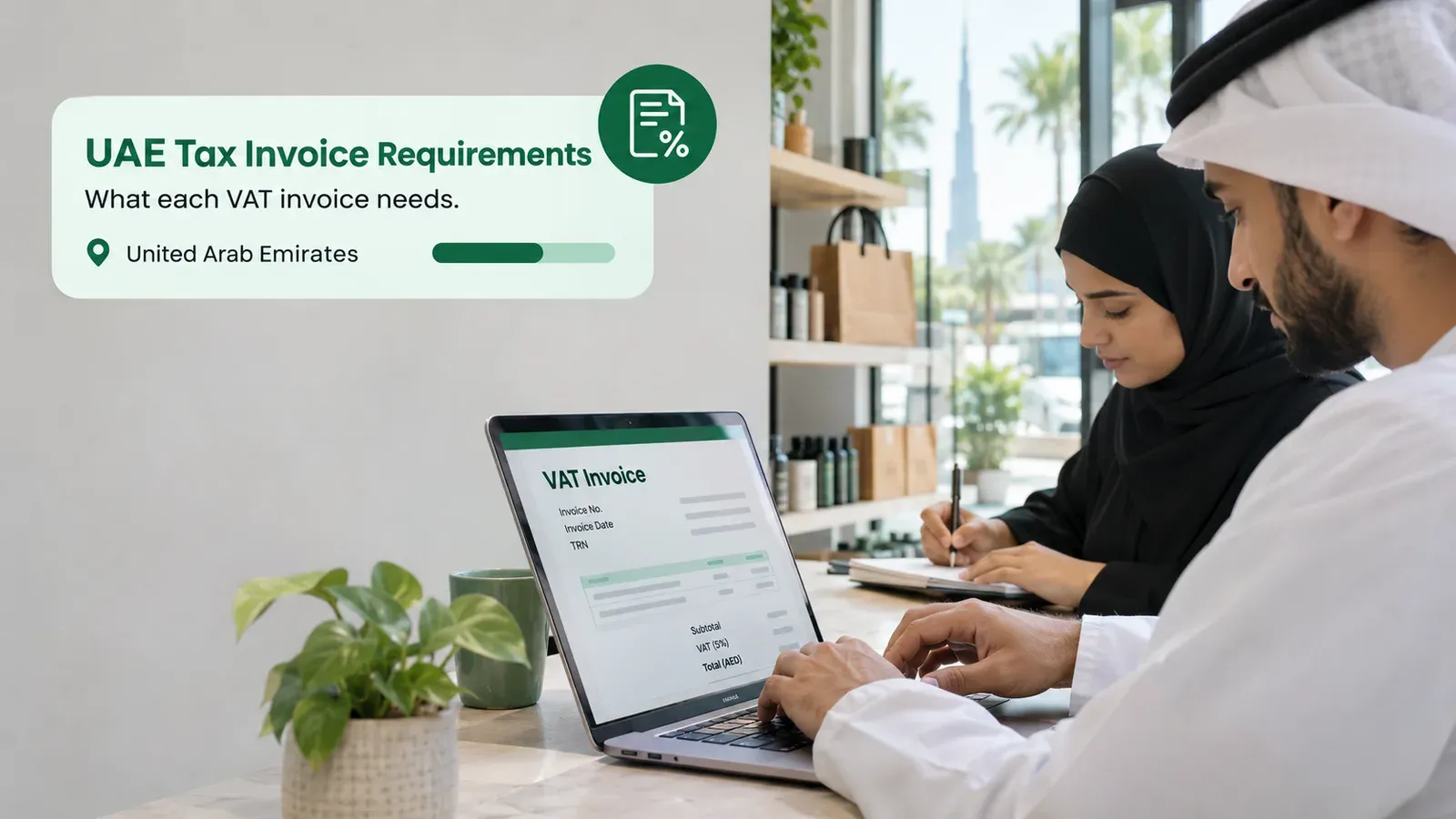
Part 1: UAE tax invoice requirements: what each VAT invoice needs
A full UAE tax invoice shows 12 particulars, including both TRNs, a sequential number, VAT per line in AED, and goes out within 14 days of the supply.
- Checklist
- 2 tables
- 6 questions answered
-

VAT registration threshold UAE: do you need to register?
You must register for VAT once taxable supplies and imports pass AED 375,000 in 12 months, and you may register from AED 187,500.
- Checklist
- 2 tables
- 6 questions answered
-

AMC contract renewal: quick tips for UAE FM companies
Keep every AMC end date on one list, remind clients 90 days early, send the renewal offer at 60 days and sign before the last visit, so work never stops.
- Checklist
- 1 table
- 5 questions answered
Recognized with numerous awards
Support, security, uptime and results, with the figures behind each badge.
















FAQ
Frequently asked questions
Straight answers to what people ask most about iCRM.
Set up for your industry
Pick yours and its features come ready.
- Automotive Dealers
- Beauty Salons
- Construction Companies
- Consulting Firms
- Online Retail
- Event Management
- Facility Management
- Healthcare Clinics
- Hospitality Businesses
- Logistics Companies
- Real Estate
- Travel Agencies
-
Does the UAE PDPL apply to a small business?
In most cases, yes. Federal Decree-Law No. 45 of 2021 covers personal data processed fully or partly by electronic means, so a CRM, a spreadsheet or a phone full of customer details is in scope. Businesses in the DIFC and ADGM follow their own free zone data laws instead.
-
Do I always need a customer's consent to keep their details?
Consent is the main rule, but the law lists exceptions, for example where processing is needed to carry out a contract with the customer or to meet a legal duty. Keep a note of why you hold each record, and ask for clear consent before marketing.
-
What can a customer ask me to do with their data?
They can ask what you hold and why, ask for a copy in a usable form, ask you to correct or erase it in certain cases, ask you to restrict processing, and object to direct marketing. Each request needs a clear, timely answer.
-
Do I need a data protection officer?
The law requires one where processing is high risk, involves systematic assessment of sensitive data, or covers large volumes of sensitive data. Most small businesses holding ordinary customer contact details will not meet those tests, but check your own case.
-
What should I do if customer data is lost or leaked?
Act at once. Contain the problem, record what happened, and report a breach that harms the privacy or security of personal data to the UAE Data Office, as Article 9 requires. Tell affected customers where needed.
Get started with iCRM
Leads, quotes, work, invoices and payments in one app, set up for the way your industry works.
- 99% Uptime guarantee
- ISO ISO-aligned security
- 24/7 Response support
- GDPR GDPR compliant
- SSL SSL encrypted
-
12
Industries Each with its own features
-
45
Features Across those industries
-
11
Areas of work From leads to payments
-
3
Editions India, France and UAE