Industry insights
The MSME 45-day payment rule explained for suppliers
Buyers must pay a registered micro or small supplier within 15 days, or up to 45 days if agreed in writing, or lose the tax deduction for that cost.
Written by The iCRM team
Published 7 min read
- 45 days Longest term a written deal can set
- 15 days The limit when nothing is agreed
- 3 times The RBI bank rate, as late interest
On this page
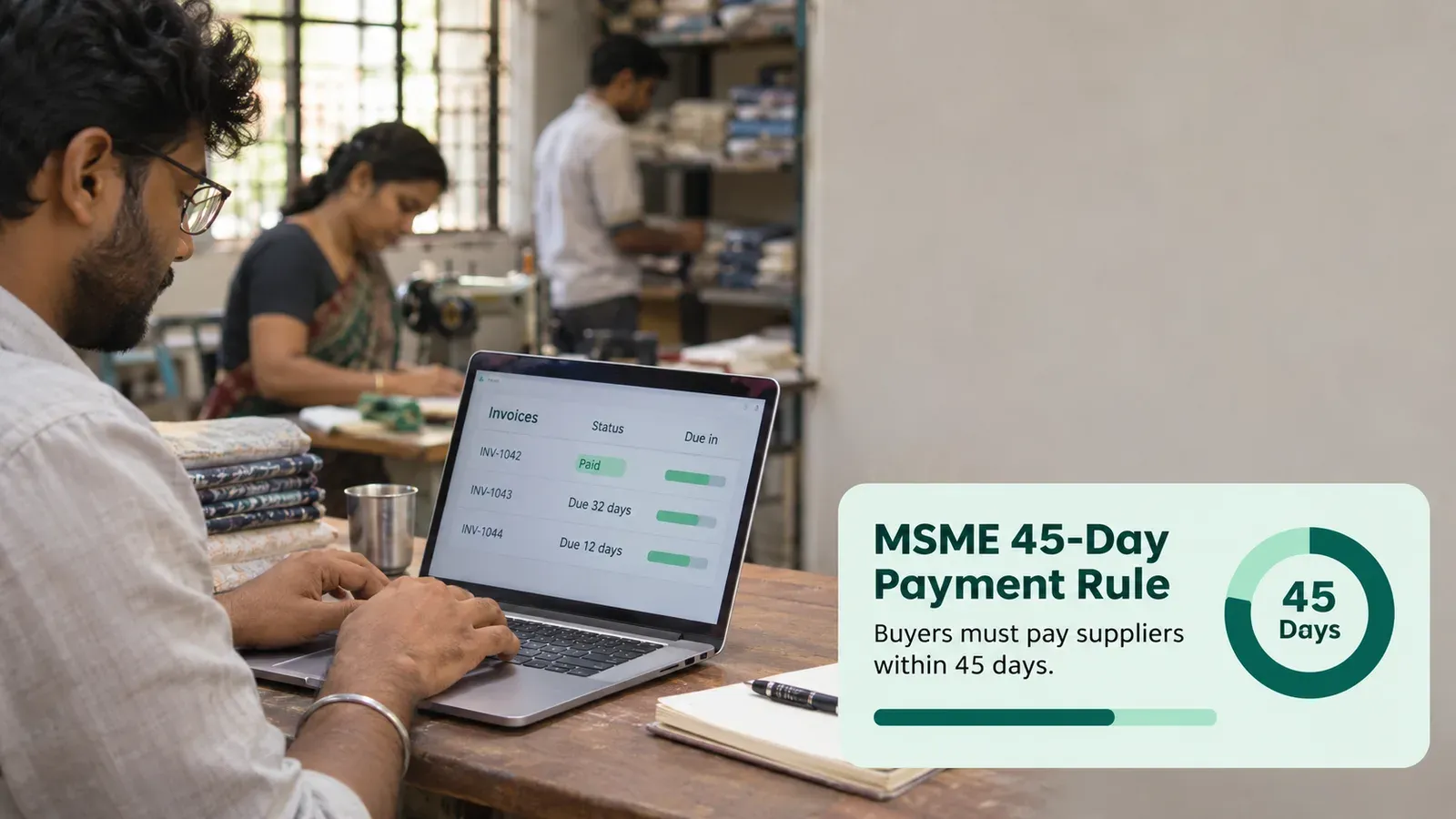
If you are a registered micro or small supplier, a buyer must pay you within the days agreed in writing, and never more than 45 days from accepting your goods or services. With no written agreement, the limit is 15 days. For costs from the 2023-24 year onwards, a buyer who pays you late also loses the tax deduction for that cost until the year it pays, under Section 43B(h) of the Income Tax Act.
Key takeaways
- The 15 and 45 day limits come from section 15 of the MSMED Act, 2006. Section 43B(h) adds a tax reason for buyers to keep to them.
- The rule protects micro and small enterprises only. Medium enterprises are paid on their contract terms.
- Your Udyam registration is how a buyer knows you are covered. Put your Udyam number on your quotes and invoices.
- Agree the payment days in writing, and note the date the buyer accepted the goods or work.
- If a buyer still pays late, the law gives you interest and a place to complain.
What the two laws say
Two laws work together here. It helps to keep them apart in your mind.
The MSMED Act, 2006 sets the payment limits. Section 15 says a buyer must pay a micro or small supplier on or before the date agreed in writing. That agreed date cannot be more than 45 days from the day the buyer accepted the goods or services. If there is no written agreement, the buyer must pay within 15 days. Section 16 adds interest if the buyer pays late.
Section 43B(h) of the Income Tax Act, 1961 was added by the Finance Act, 2023 and has applied from the 2024-25 assessment year. It says a buyer can deduct an amount owed to a micro or small enterprise only in the year it is actually paid, when it is paid after the MSMED Act limit. For an ordinary supplier bill, a buyer usually claims the cost in the year it books it. A late payment to you pushes that deduction to a later year.
From the 2026-27 tax year the new Income-tax Act, 2025 applies. The Ministry of Finance told the Rajya Sabha in July 2026 that the matching rule there is section 37(2)(g). The idea stays the same, so the advice in this guide still holds.
| Point | What it means for you |
|---|---|
| Written payment terms | Paid on the agreed date, never later than 45 days from acceptance |
| No written terms | Paid within 15 days of acceptance |
| Buyer pays late | Buyer owes you compound interest at three times the RBI bank rate |
| Buyer’s tax | Cost not deductible until the year it pays you |
| Medium enterprise supplier | Not covered: paid on contract terms |
Who is covered, and why Udyam matters
The rule covers micro and small enterprises as classified under the MSMED Act. Since 1 April 2025, a micro enterprise has investment in plant and machinery or equipment of up to 2.5 crore rupees and turnover of up to 10 crore rupees. A small enterprise has investment of up to 25 crore rupees and turnover of up to 100 crore rupees. Both tests must be met.
Your buyer cannot see your accounts. It sees your Udyam certificate. Large buyers now ask suppliers to confirm their MSME status, because their auditors and their tax audit report (Form 3CD) need it. If you have no Udyam number, many buyers will treat you as not covered.
Retail and wholesale traders have been allowed on Udyam since 2021, but the government said this was for priority sector lending. Ask your chartered accountant whether the payment limits apply to your trade before you rely on them.
What to do now
- Register free on the Udyam portal if you have not, and update it when your figures change.
- Put your Udyam number on your quotes, invoices and letterhead.
- Send your certificate to every buyer’s accounts team, and ask them to mark you as an MSME supplier in their system.
Agree the payment days in writing
The 45 days is the longest a written agreement can set. Without one, you are owed payment in 15 days. Either way, a clear written term helps you, because the buyer’s own team can see the date.
Put the term in the purchase order, the contract or your accepted quote. Many buyers’ standard terms say 60 or 90 days. For a micro or small supplier, the law caps that at 45 days, whatever the paper says. A polite note at the time of the order avoids an argument later.
A line for your quote or invoice
We are a registered micro enterprise (Udyam number on this invoice). Payment terms: 30 days from acceptance, within the limit in section 15 of the MSMED Act, 2006.
Count from the day of acceptance
The days run from the day the buyer accepts your goods or services, not from your invoice date. Under the MSMED Act, if the buyer raises no objection in writing within 15 days of delivery, the goods or services are taken as accepted on the day of delivery.
So keep proof of delivery: a signed delivery challan, the e-way bill where one applies, a completion note or an email confirming the work. Your GST invoice with your GSTIN and the buyer’s should match these dates.
| Day | What happens | What to keep |
|---|---|---|
| 0 | Goods delivered or work handed over | Signed challan, e-way bill, completion note |
| 0 to 15 | Buyer can object in writing | Any objection, and your reply |
| 15 | Taken as accepted if no objection | A note of the acceptance date |
| 30 | A friendly reminder that payment is due soon | Your message and their reply |
| 45 | The latest legal due date with written terms | The invoice and the payment record |
If a buyer still pays late
The interest is set by section 16 of the MSMED Act: compound interest with monthly rests at three times the bank rate notified by the Reserve Bank of India, from the day after the payment was due. A contract cannot take this away. Check the current bank rate on the RBI website before you work out a figure.
Most suppliers start with a reminder that names the due date and the law. If that fails, you can file a case on the MSME Samadhaan portal. It goes to your state’s Micro and Small Enterprises Facilitation Council, which first tries conciliation and then arbitration. You will need your Udyam number, the invoices, and proof of delivery and acceptance.
This guide is general. For your own case, speak to your chartered accountant or a lawyer.
Doing it in iCRM
- Customer management. Keep each buyer’s details, payment terms and accounts contact with the customer, so anyone on your team can follow up.
- Invoicing. Create invoices in the same place as your customers, with your Udyam number and the agreed payment days on every one.
- Tax management. Set your GST rates once and see the tax on every invoice.
- Payment tracking. Record payments against invoices and see at a glance which are paid, part-paid or overdue, and who to follow up with.
- Task management and the calendar. Give each reminder an owner and a date, such as day 30 and day 45, so nothing waits on memory.
- Document sharing. Keep the challan, the completion note and your Udyam certificate with the customer they belong to, ready if you need them.
An MSME payment checklist
- Your Udyam registration is done and up to date.
- Your Udyam number is on every quote and invoice.
- Every buyer has your Udyam certificate and has marked you as an MSME supplier.
- Payment days are agreed in writing, never more than 45.
- The delivery and acceptance date is recorded for every invoice.
- A reminder is planned before each due date.
- Late invoices are followed up the day after they fall due.
- You know where to file on the MSME Samadhaan portal if you need to.
Sources
- The Micro, Small and Medium Enterprises Development Act, 2006 (Office of the DC MSME, legal framework)
- Finance Ministry clarifies the Section 43B(h) 45-day MSME payment rule (TaxGuru)
- FAQs: Understanding Section 43B(h) of the Income-tax Act (Taxmann)
- FAQs: Liability of the buyer under section 15 of the MSMED Act (Taxmann)
- 45-day MSME payment rule: impact and details of Section 43B(h) (Business Standard)
- Udyam registration portal (Ministry of MSME)
- MSME Samadhaan delayed payment portal (Ministry of MSME)
Related articles
-

Vehicle service reminders for workshops and dealers
Set each vehicle's next service by date or kilometres, whichever comes first, track insurance renewals and follow up every job card so customers come back.
- Checklist
- 2 tables
- 6 questions answered
-
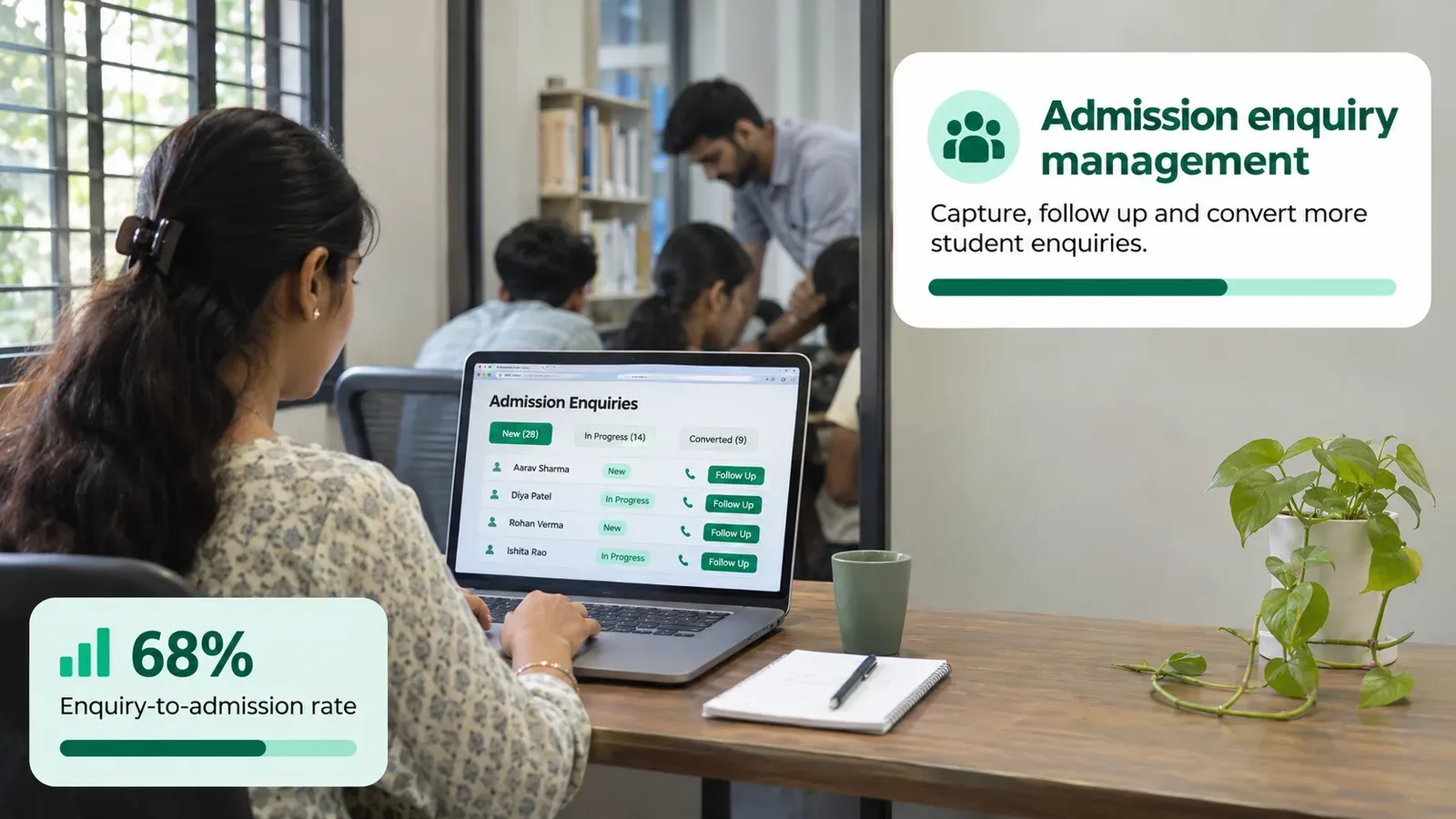
Admission enquiry management for coaching institutes
Log every admission enquiry in one list, book a counselling session or demo class within a day, follow up parents on a plan and record every fee paid.
- Checklist
- 2 tables
- 6 questions answered
-
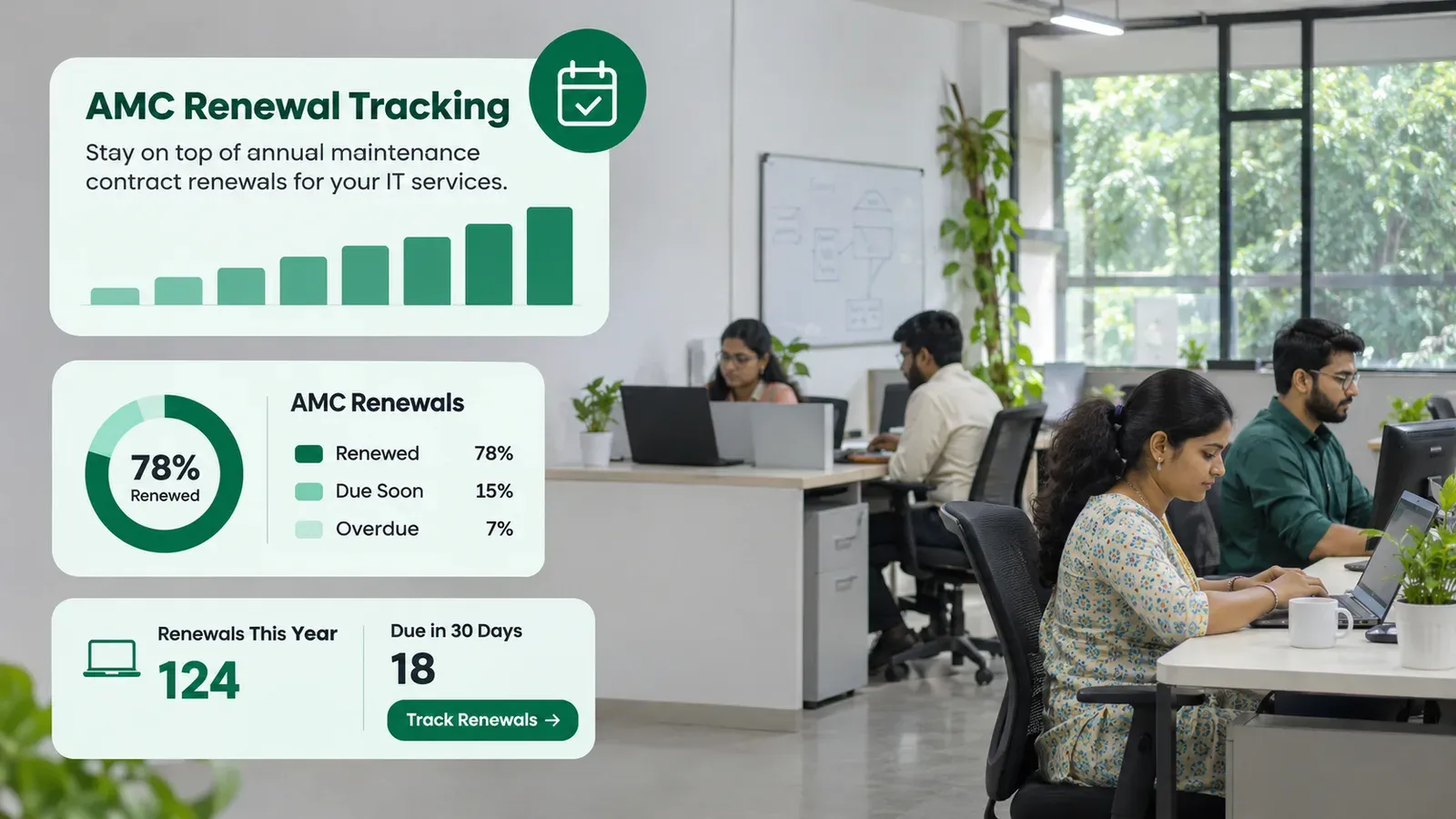
AMC renewal tracking for IT service companies
Keep every AMC's start and end dates, reminders, renewal quote and GST invoice in one place, and start each renewal 90 days before it expires.
- Checklist
- 2 tables
- 6 questions answered
Recognized with numerous awards
Support, security, uptime and results, with the figures behind each badge.














FAQ
Frequently asked questions
Straight answers to what people ask most about iCRM.
Set up for your industry
Pick yours and its features come ready.
- Farm Businesses
- Automotive Dealers
- Consulting Firms
- Online Retail
- Education Institutes
- Energy Companies
- Financial Services
- Healthcare Clinics
- Hospitality Businesses
- Law Firms
- Logistics Companies
- Manufacturing Companies
- Media Agencies
- Nonprofit Organisations
- Real Estate
- Technology Companies
-
What is the MSME 45 day payment rule?
Under section 15 of the MSMED Act, a buyer must pay a micro or small supplier within the days agreed in writing, and never more than 45 days from accepting the goods or services. With no written agreement, the limit is 15 days.
-
What does Section 43B(h) change for the buyer?
If the buyer pays a micro or small supplier after the MSMED Act limit, it cannot claim that cost as a tax deduction in the year it was booked. It can claim it only in the year it actually pays. This gives buyers a strong reason to pay on time.
-
Does the rule cover medium enterprises?
No. Section 43B(h) and the MSMED Act's payment limits protect micro and small enterprises. A medium enterprise is paid on the terms of its own contract.
-
Do I need Udyam registration to be covered?
In practice, yes. Buyers check your Udyam certificate to know you are a micro or small enterprise, and the facilitation councils and the MSME Samadhaan portal ask for your Udyam number. Register before you invoice, and share the certificate with every buyer.
-
Is the rule still in force under the Income-tax Act, 2025?
Yes. The Ministry of Finance has said that the matching rule in the Income-tax Act, 2025 is section 37(2)(g). Ask your chartered accountant how it applies to your buyers' tax year.
-
What can I do if a buyer still pays late?
The buyer owes compound interest at three times the RBI bank rate, with monthly rests, from the day after payment was due. You can file a case on the MSME Samadhaan portal, which goes to your state's Micro and Small Enterprises Facilitation Council.
Get started with iCRM
Leads, quotes, work, invoices and payments in one app, set up for the way your industry works.
- 99% Uptime guarantee
- ISO ISO-aligned security
- 24/7 Response support
- GDPR GDPR compliant
- SSL SSL encrypted
-
16
Industries Each with its own features
-
47
Features Across those industries
-
11
Areas of work From leads to payments
-
3
Editions India, France and UAE