Industry insights
Invoice payment terms in the UAE: quick tips that work
Agree terms before the work, write a real due date in AED on every tax invoice, take advances in clear stages and send polite reminders on fixed days.
Written by The iCRM team
Published 7 min read
- 14 days To issue a tax invoice after supply
- 5% VAT Shown in AED on every invoice
- 1 due date Written as a date, not a phrase
- 3 reminders Planned before it falls due and after
On this page
- Key takeaways
- Tip 1: agree the terms before the work starts
- Tip 2: write a real due date
- Tip 3: split larger jobs into an advance and part payments
- Tip 4: make the invoice itself easy to pay
- Tip 5: plan the reminders before you send the invoice
- Tip 6: say what happens if payment is late
- Doing it in iCRM
- A payment terms checklist
- Sources
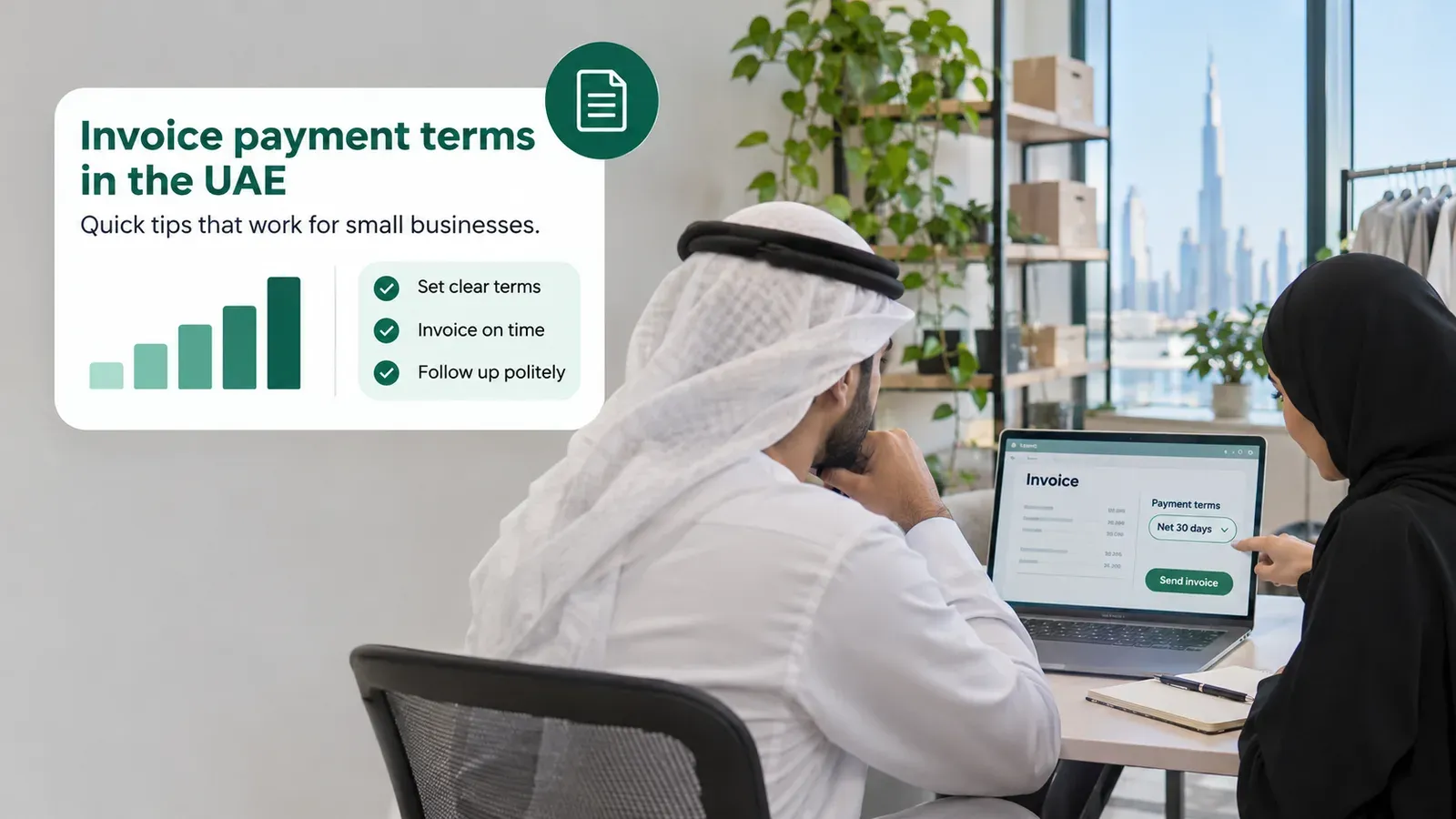
Invoice payment terms work in the UAE when the client agrees to them before the work starts, and every invoice repeats them in plain words: the amount in AED, the VAT, a real due date and how to pay. Split bigger jobs into an advance and part payments, and plan your reminders in advance. Most late payments come from vague terms, not bad clients.
Key takeaways
- Agree the terms in writing before the work, and repeat them on every invoice.
- Write a real due date, not “net 30” or “on receipt”.
- Take an advance and part payments on larger jobs, each tied to a clear stage.
- Show the VAT in AED and issue the tax invoice within 14 days of the supply.
- Plan polite reminders on fixed days, so nobody has to make an awkward call.
Tip 1: agree the terms before the work starts
The best time to talk about money is before you start. Once the job is done, you have less to bargain with.
Put the terms in the quote or proposal, and ask the client to accept it. Then copy the same words into the contract, if there is one, and onto every invoice. If the three say different things, the client will follow whichever suits them.
A clear set of terms answers four questions:
- How much is due, in AED, and is VAT included?
- When is each payment due?
- How should the client pay?
- What happens if a payment is late?
If a large client sends you their own purchase order, read its payment clause. Many set their own terms. Agree any difference before you accept the order, not after you send the invoice.
Tip 2: write a real due date
“Net 30”, “due on receipt” and “payable soon” all leave room for doubt. When does the 30 days start? Receipt by whom? A date leaves nothing to work out.
| Instead of | Write |
|---|---|
| Net 30 | Due by 15 December 2026 |
| Due on receipt | Due by 20 November 2026 |
| 50% advance | AED 12,600 due before work starts on 1 December 2026 |
| Balance on completion | AED 12,600 due within 7 days of handover, by 22 December 2026 |
Put the due date near the total, not in the small print at the foot. It is the line your client’s accounts team looks for first.
Remember that many offices in the UAE work Monday to Friday, and public holidays move with the calendar. If a due date lands on a weekend or a holiday, move it to the next working day yourself, so there is no excuse.
Tip 3: split larger jobs into an advance and part payments
For a job that runs over weeks, one invoice at the end puts all the risk on you. Agree a schedule instead, with each payment tied to a stage your client can see.
| Stage | Share | When it is due |
|---|---|---|
| Advance | 30% to 50% | Before work starts or materials are ordered |
| Part payment | 25% to 40% | When a named stage is finished |
| Balance | The rest | Within a set number of days of handover |
The shares above are examples, not rules. Pick what suits your trade and your costs. What matters is that each stage is named, so there is no debate about whether it is done.
An advance also has a VAT side. Under the UAE VAT law, receiving a payment can fix the date of supply for the amount paid. That can change when you account for VAT and when the tax invoice is due. Ask your tax agent how this applies to your deposits, and set up your invoicing to match.
Tip 4: make the invoice itself easy to pay
A correct invoice gets paid faster, because the client’s accountant has no reason to send it back.
If you are registered for VAT, the FTA sets out what a tax invoice must show. That includes the words “Tax Invoice”, both parties’ details and TRNs where they are registered, a sequential number, the dates, and the VAT in AED. A full tax invoice is generally issued within 14 days of the date of supply. The standard VAT rate is 5%.
If you bill in US dollars or another currency, the VAT must still appear in AED, with the exchange rate you used. The FTA says an invoice without it is not a valid tax invoice.
Then add what helps the client pay:
- The due date, near the total.
- Your bank details and the account name, exactly as the bank holds them.
- The reference you want on the transfer, such as the invoice number.
- A named person to contact with questions, with a phone number.
Larger UAE businesses are moving to structured e-invoices through accredited providers from 2027, and smaller ones later in 2027, under Ministry of Finance decisions. Clean, consistent invoices now make that move easier. Check with your accountant which date applies to you.
Tip 5: plan the reminders before you send the invoice
Awkward calls happen when reminders are left to memory and mood. Decide the dates when you send the invoice, and they become routine.
| When | How | Tone |
|---|---|---|
| 3 days before the due date | Email or message | A friendly note with the invoice attached |
| On the due date | Message | A short check that payment is on its way |
| 7 days after | Firm and polite, with a new date | |
| 14 days after | Call | A direct talk about what is holding it up |
Keep each message short. Name the invoice, the amount and the date.
A reminder that works
Hello Fatima, a quick note that invoice 1086 for AED 9,450 is due this Thursday, 3 December. The bank details are on the invoice. Thank you, and let me know if anything is unclear.
Tip 6: say what happens if payment is late
Late fees only work if the client agreed to them beforehand. Put any late payment terms in the quote or contract, in plain words, and keep them reasonable. Ask a lawyer how they apply to your contracts before you rely on them.
Often the stronger step is simpler: say that the next stage of work starts once the last payment is in. Clients understand that, and it protects you without a dispute.
Doing it in iCRM
These are the tools most UAE businesses have in iCRM for setting terms and getting paid.
- Customer management. Each client’s details, TRN and agreed terms in one place, ready for every quote and invoice.
- Invoicing. Create the invoice from the client’s record, with the same terms you agreed and a clear due date.
- Tax management. Set your VAT rate once and apply it the same way to every quote and invoice.
- Payment tracking. See which invoices are paid, part paid or still due, so advances and part payments stay straight.
- Task management and calendar. Put each reminder date on the calendar with an owner, so nothing waits on memory.
- Document sharing. Keep the accepted quote, the contract and the invoices together, and share them with the client or your accountant.
A payment terms checklist
- Terms agreed in writing before the work starts.
- The same terms on the quote, the contract and every invoice.
- A real due date near the total, moved off weekends and holidays.
- Larger jobs split into an advance and named part payments.
- Your tax agent asked how deposits affect your VAT dates.
- A valid tax invoice issued within 14 days of the supply.
- VAT shown in AED, with the exchange rate for foreign currency invoices.
- Bank details, a payment reference and a contact person on the invoice.
- Reminder dates set the day the invoice goes out.
- Any late payment terms agreed beforehand and checked with a lawyer.
Sources
Related articles
-
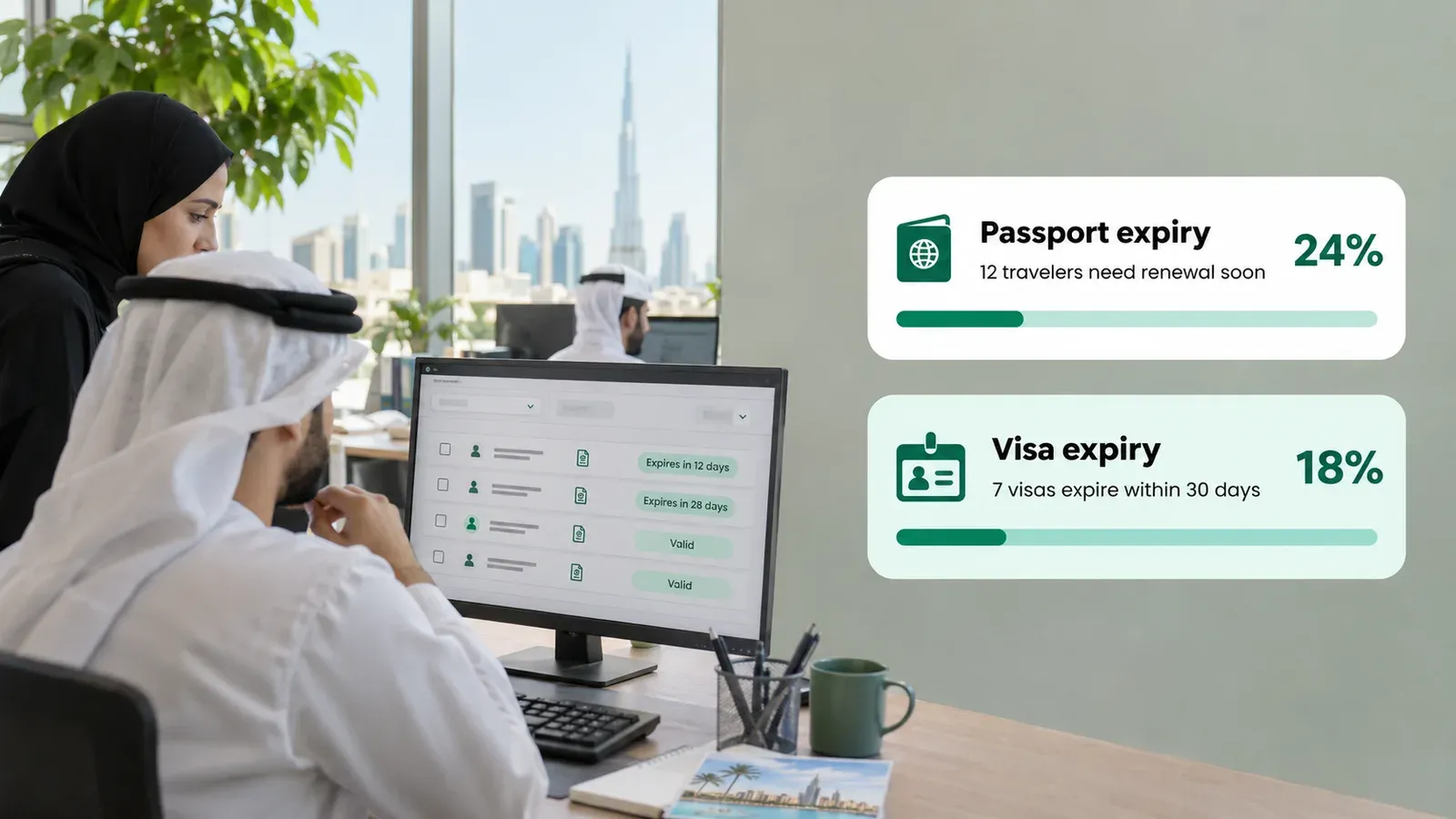
Passport and visa expiry tracking for travel agencies
Record every traveller's passport, visa and residence permit expiry on their profile, check it against each trip, and set reminders months before it matters.
- Checklist
- 2 tables
- 5 questions answered
-
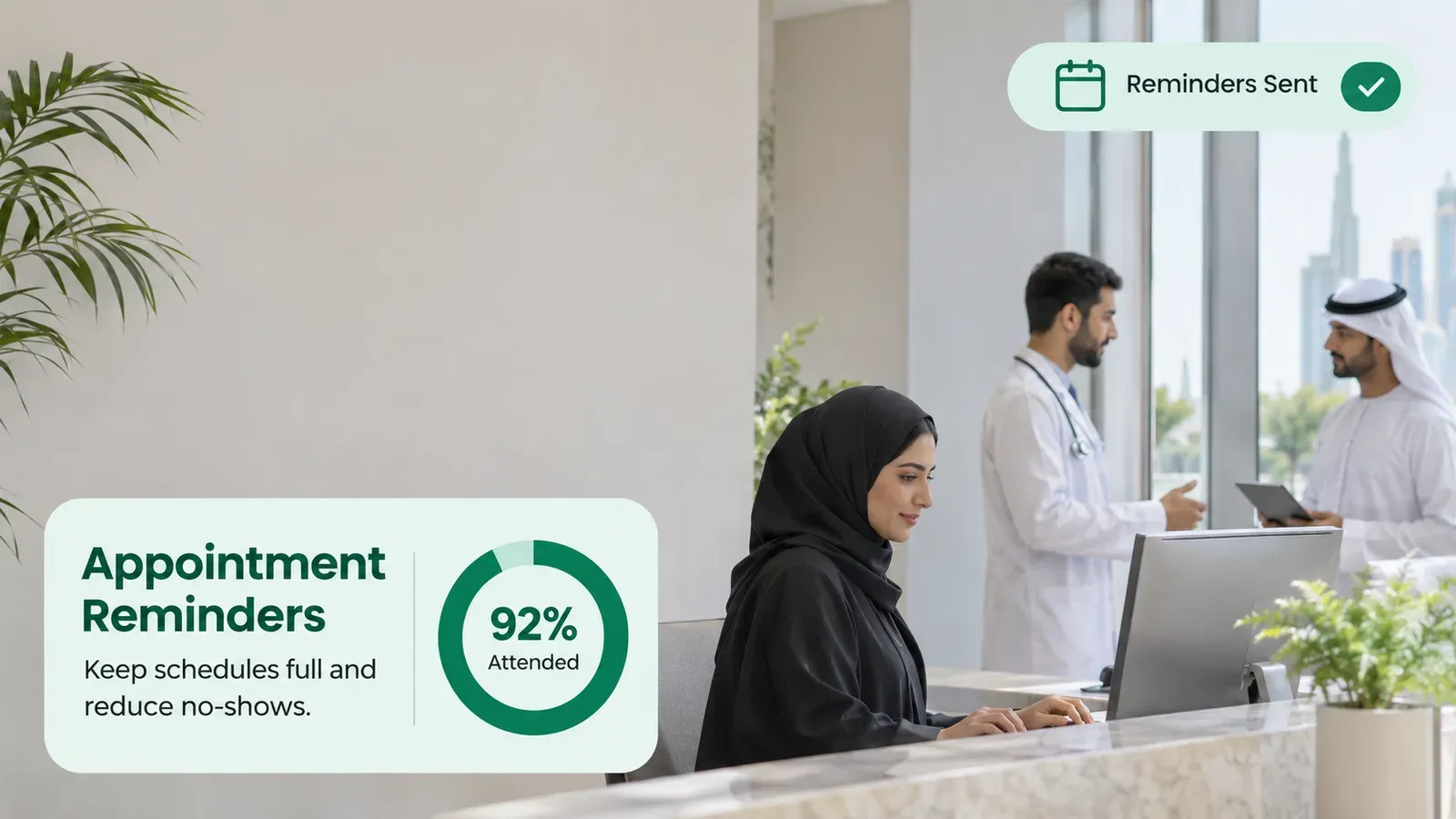
Patient appointment reminders: quick tips for UAE clinics
Send two short reminders, two days and a few hours before the visit, say only the time and place, and keep clinical notes visible only to the roles that need them.
- Checklist
- 2 tables
- 6 questions answered
-

Part 2: Property portal leads: a CRM routine for UAE agents
Log every portal and website enquiry in one list, tag it by area, budget and unit type, and move it through set stages from first call to offer.
- Checklist
- 2 tables
- 5 questions answered
Recognized with numerous awards
Support, security, uptime and results, with the figures behind each badge.















FAQ
Frequently asked questions
Straight answers to what people ask most about iCRM.
Set up for your industry
Pick yours and its features come ready.
- Automotive Dealers
- Beauty Salons
- Construction Companies
- Consulting Firms
- Online Retail
- Event Management
- Facility Management
- Healthcare Clinics
- Hospitality Businesses
- Logistics Companies
- Real Estate
- Travel Agencies
-
What are good invoice payment terms for a small UAE business?
Terms your client agreed to before the work started, written the same way on the quote, the contract and the invoice. Many owners start with an advance, part payments at clear stages and a balance due on a set date. Pick what suits your trade and your cash, then keep to it.
-
Should I write "net 30" or an actual due date?
An actual date, such as "Due by 15 December 2026". A date leaves nothing to work out and nothing to argue about. You can still say "30 days from the invoice date" in your contract, as long as the invoice shows the date itself.
-
Does an advance payment affect VAT in the UAE?
It can. Under the UAE VAT law, receiving a payment can fix the date of supply for the amount paid, which affects when you account for VAT and issue a tax invoice. Ask your tax agent how this applies to your deposits.
-
Can I invoice a UAE client in US dollars?
Yes, but the VAT amount must also be shown in AED, with the exchange rate you used. Without the AED VAT figure, the FTA does not treat it as a valid tax invoice.
-
Can I charge a late payment fee?
Only if the client agreed to it beforehand, ideally in a signed contract or accepted quote. Write it in plain words, keep it reasonable, and ask a lawyer how it applies to your contracts before you rely on it.
-
How do I remind a client without an awkward call?
Plan the reminders before you send the invoice. Send a friendly note a few days before the due date, another on the day, and a firm one a week after. Because they are planned, they feel routine, not personal.
Get started with iCRM
Leads, quotes, work, invoices and payments in one app, set up for the way your industry works.
- 99% Uptime guarantee
- ISO ISO-aligned security
- 24/7 Response support
- GDPR GDPR compliant
- SSL SSL encrypted
-
12
Industries Each with its own features
-
45
Features Across those industries
-
11
Areas of work From leads to payments
-
3
Editions India, France and UAE